Somewhere on the internet right now, a sleek cat is sprinting on a giant wheel like a tiny, furry Olympian. It looks incredible. It looks like the solution to every chubby, bored, 3 AM-zoomie cat on the planet. Then you check the price, and your wallet quietly leaves the room.
Cat exercise wheels can work, but only for cats who actually learn to use them, and many cats take weeks to figure them out (or never do). They’re not a magic fix for weight or boredom, and the cost can be steep. So before you buy one, here’s an honest look at what the wheels can and can’t do, who they’re best for, and what to check so you don’t end up with a very expensive laundry rack.
What Is a Cat Exercise Wheel?
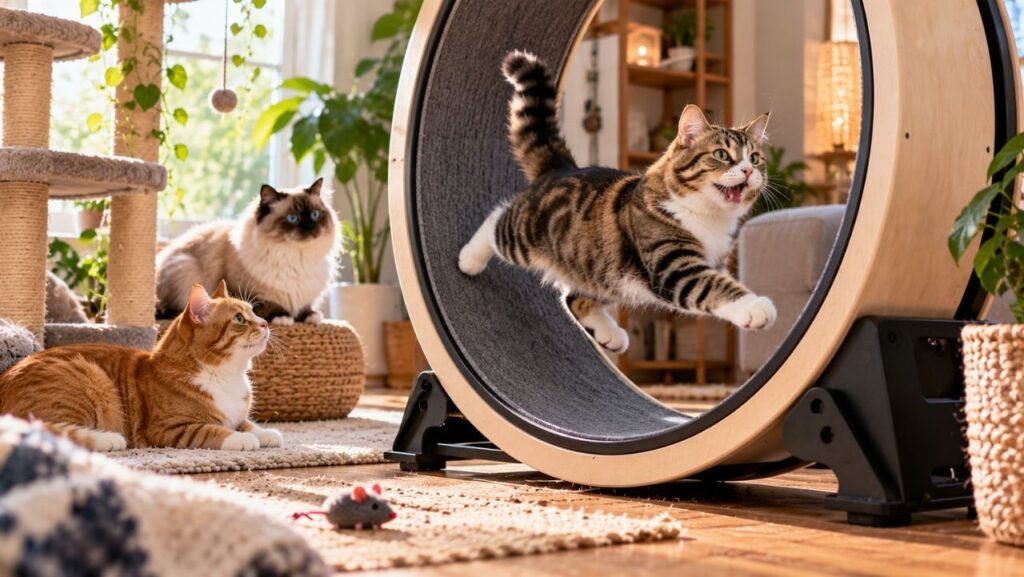
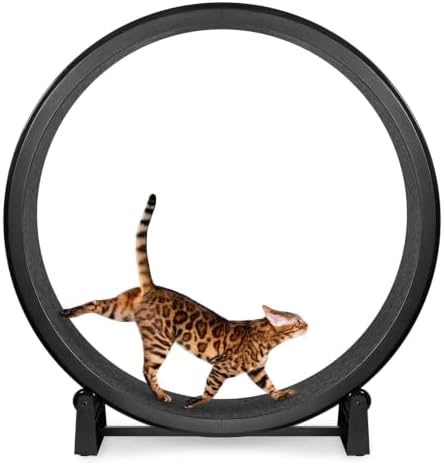
It’s basically a giant hamster wheel for cats: a large, circular track (often around 40 inches across or more) that lets your cat run in place. The bigger diameter matters, because a cat’s spine arches when it runs, and a wheel that’s too small can force an awkward, unhealthy posture.
Most wheels have a carpeted or grippy running surface, a stable base, and sometimes a lock pin so you can hold the wheel still while your cat gets used to it.


The Honest Truth: Do They Work?
Here’s the part the product videos skip: there’s very little formal research on cat wheels. What we have is owner experience, vet opinions, and common sense. And that picture is mixed.
What owners report:
- Some cats take to it quickly and use it daily.
- Many cats need weeks of patient training with treats and toys.
- Some cats never use it at all.
What cat experts say:
- Cats naturally move in short, explosive bursts, like stalking, chasing, and pouncing. A wheel mimics running, but not hunting.
- Interactive play with you is still considered one of the best ways to exercise a cat.
- A wheel can be a great add-on, but it isn’t a replacement for play, climbing, and mental stimulation.
So the honest answer: yes, for some cats, but it’s far from guaranteed.
Who Might Love a Cat Wheel
A wheel is most likely to succeed with:
- Young, energetic cats who need a place to burn off steam
- Indoor cats with limited space or no outdoor access
- Motivated, food-driven cats who respond well to treat training
- Confident cats who aren’t easily spooked by new objects
- Owners with time to train, since success depends on patience


Who Should Probably Skip It
A wheel may not be the right choice for:
- Shy or anxious cats, since a big, moving object can be scary
- Senior cats or cats with joint problems, since running may be uncomfortable or risky
- Very overweight cats without a vet’s go-ahead
- Small spaces, since these wheels are large
- Households with limited budgets, especially if you’re unsure your cat will use it
- Cats who already get lots of play and exercise and don’t seem to need more
If your cat has a health condition, ask your vet before starting any new exercise routine.
What Do They Cost?
Quality cat wheels commonly cost around $100 and up, with some premium versions costing much more. You’ll also find lower-priced options from lesser-known sellers. As with most things, you often get what you pay for in build quality, stability, and safety, but a higher price doesn’t guarantee your cat will use it.
What to Look for Before You Buy
- Size. A larger diameter is gentler on your cat’s back. Check the dimensions against your cat’s size and length.
- Stability. The wheel should sit firmly and not wobble or tip.
- Smooth, quiet rolling. A noisy wheel can scare cats (and wake you at 3 AM).
- Safe running surface. Look for a grippy, carpeted, or textured track with no gaps where paws could get caught.
- A lock pin or brake, which helps with training and lets you stop the wheel when needed.
- Sturdy materials with no sharp edges or loose parts.
- Return policy. Since many cats refuse the wheel, a seller that accepts returns is a lifesaver.
- Assembly. Some wheels take a while to put together, so check reviews.
What’s Available on Amazon
Amazon sells a range of cat wheels, from large models with carpeted tracks to ones with lock pins and quiet rollers. Some listings, such as the VEVOE 48-inch wheel, advertise a larger diameter and a built-in cat teaser. Many others come from smaller sellers with similar designs.
Because there are so many look-alike listings, read recent reviews carefully, check the size, and make sure the return policy is clear. Be wary of wheels that are very small, flimsy, or unstable.

- Spacious for Medium to Large Cats: Measuring 48 in/1200 mm outer diameter and 43 in /1080 mm inner diameter, this cat ex…
- Cat Security Comes First: Designed for medium to large cats, this exercise wheel ensures no strain on your cat’s spine. …
- Say Goodbye to Loud Noise: Equipped with TPE silent wheels and noise-reducing holes on the base, this cat treadmill mini…
How to Train a Cat to Use a Wheel
If you do take the plunge, patience is everything. Here’s a basic approach:
- Let the wheel sit in the room for a few days so your cat can sniff and explore it.
- Lock the wheel in place and put treats or toys on it so your cat gets comfortable standing on it.
- Reward every positive step, like sniffing, touching, or stepping on the wheel.
- Use a wand toy or treats to lure your cat to take a step, then a few.
- Unlock the wheel slowly and let it move a tiny bit while you reward her.
- Keep sessions short (a few minutes) and always end on a good note.
- Never force it. A scared cat will avoid the wheel for good.
Some cats get the hang of it in days. Others take weeks or months. And a few will sit in the middle of it, looking at you like you’ve lost your mind.
Safety Tips
- Supervise the first sessions until you’re sure your cat is comfortable and safe.
- Check for gaps and loose parts regularly.
- Place the wheel on a flat, stable surface away from stairs and furniture edges.
- Don’t push your cat to run. Let her set the pace.
- Watch for signs of strain, such as limping, heavy panting, or reluctance to move.
- Remove tails, long fur, or toys that might get caught in the mechanism.
Cheaper Ways to Burn Off Energy
If you’re not sure about the wheel, you can often get great results for much less:
- Daily wand-toy sessions. Ten to fifteen minutes of stalk-chase-pounce can tire out most cats.
- Cat trees and shelves for climbing and jumping
- Puzzle feeders that make cats work for their food
- Window perches for bird-watching
- Rotating toys to keep things interesting
- A play session before bed to reduce 3 AM zoomies
These options also help with the mental side of exercise, which a wheel alone doesn’t provide.
The Bottom Line
A cat exercise wheel can be a fun, effective way to burn energy for the right cat, but it’s a gamble. If your cat is young, energetic, and motivated by treats, and you’re ready to train her patiently, it might be a great investment. If your cat is shy, older, or already well exercised, you may be better off with a wand toy and a good cat tree. Either way, check the return policy first, and don’t be surprised if your cat prefers the box the wheel came in.
Disclaimer: This article is for general informational purposes only and is not a substitute for professional veterinary advice. Talk to your veterinarian before starting a new exercise routine, especially if your cat is overweight, elderly, or has a health condition. Product details and prices can change, so check each listing before buying.