Picture this: you’re on the couch, you whisper “I love you” to your cat, and your cat responds by blinking slowly… then walking away like a tiny furry celebrity avoiding the paparazzi.
So, do cats actually recognize love? Or are we all just living with a judgmental roommate who pays rent in shedding?
The honest answer is: science can’t measure “love” the way humans write about it. But research can measure things like attachment, stress, social bonding, and how cats respond to their caregiver. And when you look at that evidence, it points to something cat owners have suspected all along:
Many cats form real emotional bonds with humans — they just express it in cat language.

What “love” looks like to a cat (and why it’s different)
Humans are loud about affection. We hug. We talk. We kiss foreheads. We make playlists.
Cats are… subtle.
For cats, affection is usually tied to safety and trust. A cat that feels safe is a cat that can relax, explore, and show normal social behavior. In the wild, cats are both predator and prey, so “feeling safe” is not a small thing — it’s survival.
That means cat love often looks like:
- choosing to sit near you (not always on you)
- sleeping in the same room
- showing relaxed body language
- asking for attention in short, very specific bursts (on their schedule, obviously)
In other words: a cat’s love is often less “omg best friend!!” and more “I have evaluated you. You are acceptable.”
What research says: cats can form attachment to humans
One of the strongest research-backed ideas is that cats can form attachment styles with their caregivers — similar in concept to how babies (and dogs) form attachments.


The “secure base” effect
In studies that adapt classic attachment testing, many cats show signs of using their caregiver as a secure base:
- They’re more likely to explore an unfamiliar environment when their caregiver is present.
- They may show increased stress when separated.
- They tend to calm down when reunited.
Not every cat shows this (cats are individuals with different backgrounds), but it’s a big shift from the old stereotype that cats are “emotionally detached.”
Translation: For many cats, you’re not just the food person. You’re part of the safety system.
Do cats recognize you specifically?
Yes — and they have a few ways of doing it.
1) Voice recognition (even if they ignore it)
Research suggests cats can distinguish their owner’s voice from a stranger’s voice. The hilarious part is that recognition doesn’t always look like a dramatic run across the room.
Cats often respond with subtle cues:
- ear flicks
- head movement
- tail shift
They heard you. They’re just practicing selective independence.
2) Scent matters (a lot)
Cats rely heavily on scent. They learn your smell, the smell of the home, and the scent “profile” of their safe people.
This is why face rubbing is important (more on that soon). Your cat is literally mixing scents with you — it’s a social thing.
Cat emotions: what we know (and what we don’t)
Cats absolutely experience emotions like:
- fear/stress
- curiosity
- contentment/relaxation
- frustration
Do they experience complex human-style emotions exactly the same way? We can’t say that. But behavior research and physiology (like stress markers) clearly show that cats have emotional states and can be affected by social relationships.
A strong bond often shows up as:
- seeking proximity
- choosing you over other options
- calming down in your presence
- maintaining routines with you


The cat “love signals” that actually mean something
Here are the behaviors that typically suggest trust and bonding.
1) Slow blinks
Slow blinking is often associated with relaxed, friendly intent. In studies, cats may respond positively when humans slow blink at them — approaching more readily and appearing calmer.
Try it: soften your eyes, slow blink, look away. Don’t stare. Staring is predator energy.
2) Head bunts and cheek rubs
When your cat bunts you (the head boop) or rubs their cheeks on you, that’s not random.
Cats have scent glands around the face, and rubbing is a mix of:
- social bonding
- scent sharing
- “you belong to my group” marking
It’s basically a cat friendship bracelet, but with forehead pressure.
3) Following you around
Some cats are independent — others are tiny supervisors.
If your cat regularly follows you room to room, it often means:
- curiosity
- routine attachment
- social preference
Bathroom escort duty is optional but common.
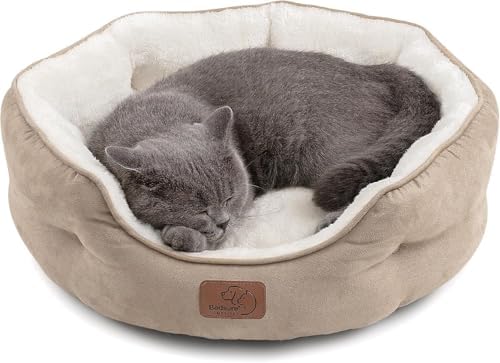
4) Sleeping near you
Sleep is vulnerability. A cat that chooses to sleep near you is showing trust.
Even if they sleep one meter away like a security guard rather than on your lap, it still counts.
5) Showing the belly (with a warning label)
Belly display can indicate comfort and trust, but it’s not always an invitation to touch.
Many cats are basically saying:
“I feel safe enough to expose my soft parts.”
not
“Please rub my stomach like a dog.”
Proceed carefully.

Why your cat might “love you” but still act… weird
Cats can be bonded and still:
- ignore you when you call them
- pretend the expensive bed doesn’t exist
- scream for food and then walk away from it
This doesn’t cancel affection. It’s just… cat operating system behavior.
More serious reasons a cat may seem less affectionate:
- personality differences (some cats are introverts)
- early socialization (kittens handled gently early often become more people-friendly)
- stress (changes in routine, new pets, loud environments)
- pain or illness (sudden behavior changes deserve a vet check)
How to build a stronger bond (without forcing cuddles)
If you want your cat to feel loved in a way they actually appreciate, focus on trust and predictability.
1) Respect consent
Stop petting before the tail starts whipping. End on a positive note.
Cats remember patterns. If interactions stay pleasant, they’ll come back for more.
2) Use play as a love language
Short play sessions are huge:
- 5–10 minutes
- 1–3 times a day
- wand toys, chase games, “hunt” style play
Play is stress relief, exercise, and bonding all in one.
3) Reward social contact
If your cat chooses to approach, reward it:
- gentle praise
- a small treat
- a favorite scratch spot
You’re teaching “being near my human is good.”
4) Make routines predictable
Cats love routines more than we do.
Consistent feeding, play, and quiet time makes you feel like a safe, reliable part of their world.
5) Create cat-friendly comfort zones
Window perches, hidey beds, scratching posts, and vertical space reduce stress — and less stress often means a more affectionate cat.
Quick checklist: does my cat recognize love?
If your cat does several of these consistently, you likely have a solid bond:
- slow blinks at you
- rubs face/head on you
- chooses to sit or sleep near you
- greets you (even casually) when you return
- seeks you when startled or unsure
- relaxes around you (soft body, normal grooming, comfortable posture)
Final take
Cats may not express love with nonstop cuddles and excited squeals. But research and behavior evidence strongly suggest many cats form meaningful bonds with humans and show attachment through trust-based behaviors.
So yes — your cat can recognize love.
They just prefer to communicate it with a blink, a head boop, and the occasional decision to sit on your laptop because it’s clearly the most important object in the room.