Bringing home a new kitten is equal parts adorable and chaotic. One minute you’re staring at tiny beans (toe beans!) and the next you’re sprinting across the room because someone just discovered the curtains are climbable.
A little prep goes a long way. Here are 10 essentials to have ready before your kitten arrives — so day one feels like “welcome home” instead of “why is there a cat inside my couch?”
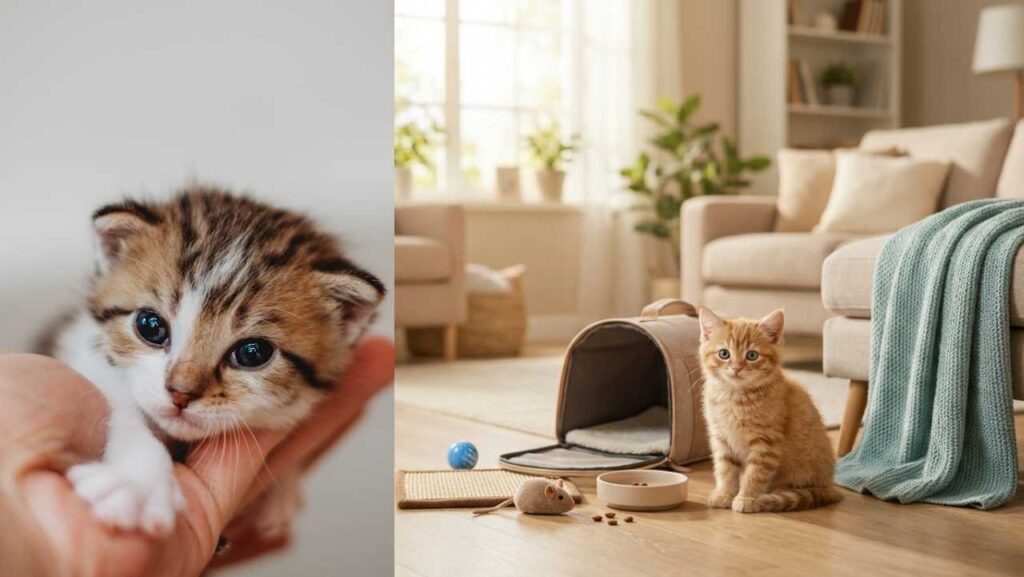
1) A safe “kitten room” (or a cozy starter zone)
Kittens can get overwhelmed in a big new space.
Set up a small area (bedroom, office, bathroom) with everything they need:
- food + water
- litter box
- bed
- toys
This helps your kitten feel secure and makes litter training easier.
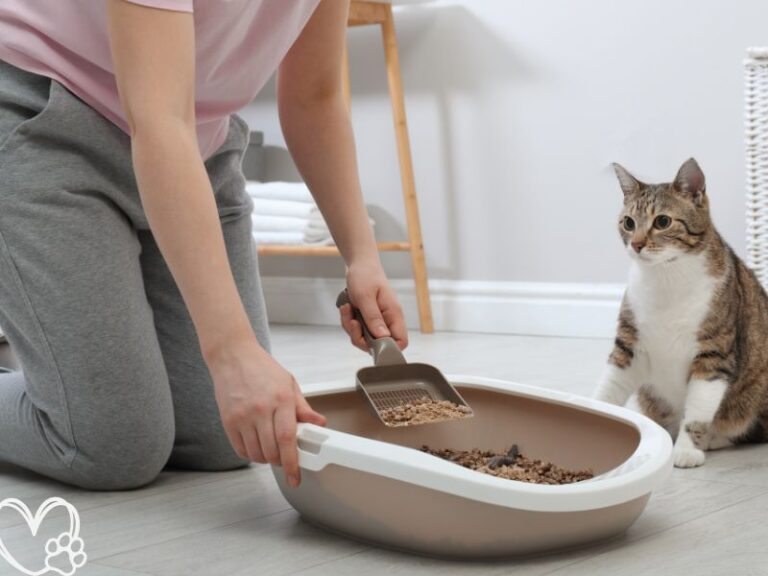
2) A proper litter box (and the right litter)
Start simple.
What to choose:
- a low-sided litter box (easy to climb into)
- unscented litter (many kittens prefer it)
- scoop + trash bags
Helpful tip: Keep the litter box away from food and water. Cats like their “kitchen” and “bathroom” separate.
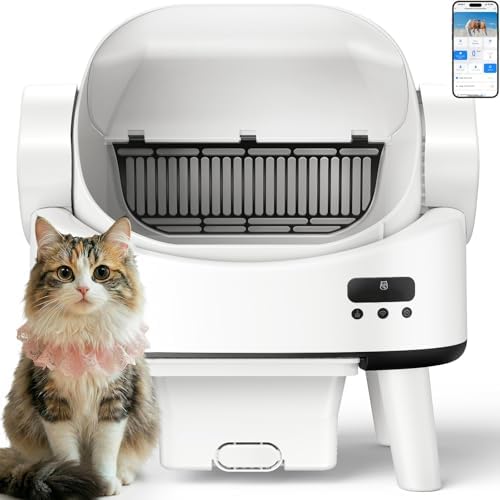


3) Kitten food (and a feeding plan)
Kittens need kitten-specific nutrition to grow.
Have:
- quality kitten food (wet, dry, or both)
- a schedule (most kittens do well with multiple small meals)
Helpful tip: Ask the previous caregiver/shelter what food they used. Transition slowly over 7–10 days to avoid tummy drama.



4) Food and water bowls (that don’t slide everywhere)
Choose bowls that are:
- sturdy (ceramic or stainless steel)
- shallow and wide (more comfortable for some cats)
Optional upgrade: a water fountain — some cats drink more when water is moving.


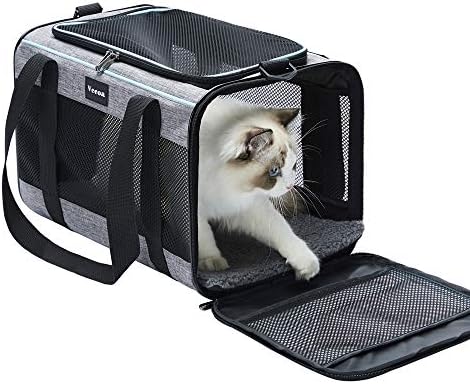
5) A carrier (non-negotiable)
Even if you never travel, you’ll need a carrier for:
- vet visits
- emergencies
- moving day
Pick a sturdy carrier with good ventilation. Bonus points for a top-opening style (much less wrestling).
Pro tip: Leave it out with a soft blanket inside so it becomes a normal object, not a portal to the vet.


6) A comfy bed + a warm blanket
Kittens sleep a lot. Like… a lot.
Provide:
- a washable bed
- a soft blanket
If your home runs cool, a heated pet pad (low-temp, pet-safe) can be a game-changer — just make sure your kitten can move away from it.



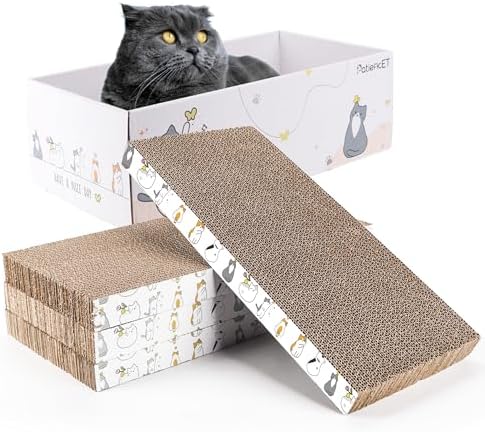
7) Scratching options (to protect your furniture and your sanity)
Kittens scratch — it’s normal. They’re not being “bad,” they’re being cats.
Have at least:
- one vertical scratcher (post)
- one horizontal scratcher (cardboard pad)
Place them near sleep spots and in the rooms you use most.


8) Toys for hunting, chewing, and boredom prevention
Kittens are tiny athletes with zero self-control.
Great starter toys:
- wand toy (interactive play)
- small balls/mice
- a kicker toy for bunny-kicking
- puzzle toy (optional)
Safety note: Avoid loose strings left unattended.


9) Kitten-proofing supplies (because they will find the danger)
Before arrival, do a quick sweep:
- hide/cover cords (cord protectors help)
- remove toxic plants (many common houseplants are unsafe)
- secure breakables
- block tiny gaps (behind appliances, under furniture)
If your kitten could fit their head somewhere, they will attempt it. Confidence is not the same as competence.
10) A vet plan (and a first-week checklist)
Schedule a vet visit soon after adoption (timing depends on where they came from).
Have ready:
- vet contact info
- vaccine/deworming records (if available)
- plan for spay/neuter (if not already done)
Helpful tip: Take a recent photo of your kitten for your phone (and microchip registration later). Yes, you already have 47 photos. Add one more that shows the full body and face clearly.
Quick “first day” setup checklist
- Kitten room ready
- Litter box accessible
- Food + water placed
- A hiding spot available (box or covered bed)
- A calm, quiet arrival (no big introductions in the first hour)
Final take
The goal isn’t perfection — it’s safety, comfort, and routine. If your kitten has food, water, a litter box, a cozy place to sleep, and a few outlets for scratching and play, you’re already doing great.
And yes, your kitten will still zoom at midnight. That’s not a problem. That’s a feature.