You’ve seen the videos. A calm cat in a tiny vest, strolling down the sidewalk like a fluffy tourist. Then you picture your own cat, who flattens into a pancake when you put her in a carrier, and you wonder if those videos are staged.
Yes, you can walk a cat, but it’s not like walking a dog. Cats don’t heel, they don’t fetch, and they definitely don’t care about your route. The goal is a safe, supervised outing where your cat explores at her own pace while you hold the leash. Some cats love it, some tolerate it, and some flatly refuse. Here’s how to find out which one you have, plus the best harnesses and a step-by-step training plan.
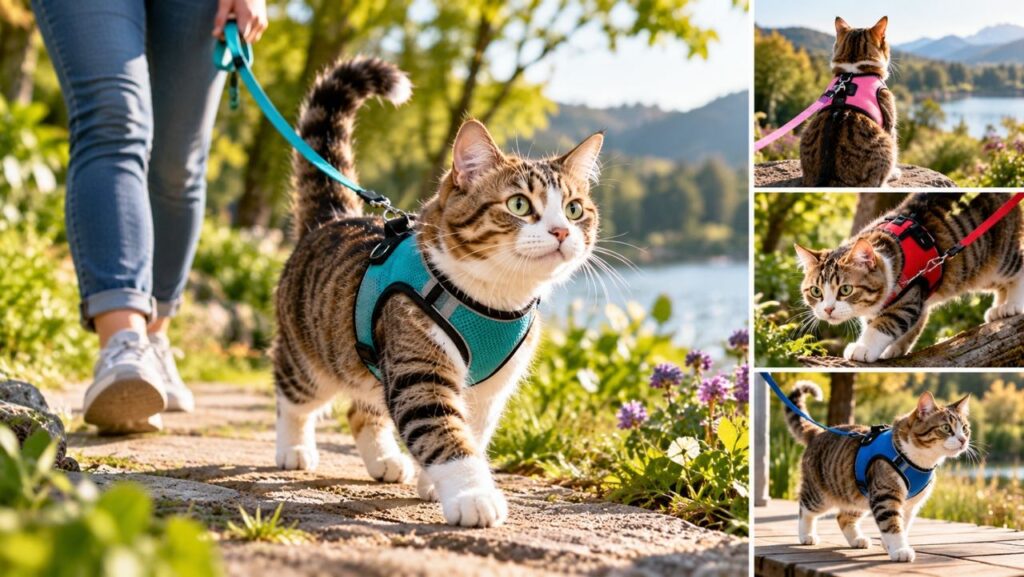
Is Leash Walking Right for Your Cat?
Walking a cat works best for:
- Curious, confident cats who enjoy new smells and sights
- Young cats and kittens, who adapt to new things more easily
- Indoor cats who’d benefit from a safe way to experience the outdoors
- Cats who already tolerate being handled
It might not be a good idea for:
- Very shy, fearful, or easily startled cats
- Cats with health problems or mobility issues (ask your vet)
- Cats who live in busy, noisy areas with lots of dogs or traffic
- Cats who panic in new places
There’s no shame in skipping it. Plenty of happy cats prefer the couch to the sidewalk. If your cat hates the idea, try a catio, a window perch, or a safe backyard setup instead.


Before You Start: Health and Safety
A few basics before your first outing:
- Visit your vet. Make sure your cat is up to date on vaccines and has flea, tick, and parasite protection.
- Microchip your cat and keep your contact information current.
- Use a harness, never a collar. A collar can slip off or injure your cat’s neck if she pulls.
- Add ID tags to the harness or collar in case she gets loose.
- Check your local rules. Some places have leash or outdoor-cat regulations.
Even with a good harness, cats are famously good at wriggling out of things. Stay alert, stay close, and never leave a cat tied up unattended.



What to Look for in a Cat Harness
Cats are not small dogs, and cat harnesses are built differently. Look for:
- A secure fit. It should be snug (you can fit two fingers under it) but not tight.
- A design that resists backing out. Vest-style and step-in harnesses are popular for this reason.
- Soft, breathable material that won’t irritate or overheat your cat.
- Adjustable straps to fine-tune the fit.
- A lightweight leash. A heavy leash can stress a small cat.
- Reflective details for visibility.
- Easy on-and-off. The faster it goes on, the less drama.
Measure your cat’s neck and chest before ordering, and check the brand’s size chart.
Four Harnesses Worth Considering
1. rabbitgoo Cat Harness and Leash Set
A soft, vest-style harness with adjustable straps, a leash included, and reflective strips. Vest designs cover more of the cat’s body, which can make it harder for her to slip out.
Best for: First-time walkers and owners who want a harness and leash in one set.
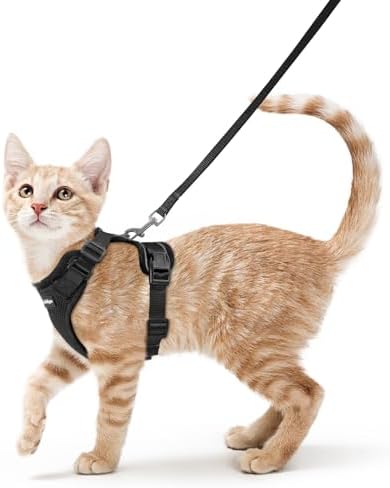
- Escape-proof Cat Harness for Small to Average Cats: Securely fits neck 8.5-11″ and chest 13.5-16″—please confirm your pe…
- Cloud-light Comfort: Made with ultra-soft air-mesh, this breathable harness keeps your kitty cool and comfy on sunny str…
- Guard Your Explorer: Clip the leash to the reinforced back D-ring for reliable control. Reflective strips enhance visibi…
2. PetSafe Come With Me Kitty Harness and Bungee Leash
A well-known cat harness with a stretchy bungee leash that absorbs sudden tugs. The bungee leash is easier on a cat’s body if she lunges or bolts.
Best for: Cats who tend to dart or pull, and owners who like a classic design.

- Outdoor Fun: Improve your indoor cat’s health and happiness with walks together outside your home
- Comfortable Control: Designed specifically for kitties, the harness applies gentle pressure to the shoulders rather than…
- Adjuatable Fit: Two adjustment points allow you to custom fit the harness to your cat’s body type; always measure your c…
3. Voyager Step-In Cat Harness and Leash
A mesh step-in harness: your cat steps into the openings, and you fasten it over her back. For cats who dislike having things pulled over their heads, this design can be easier.
Best for: Cats who hate head-first harnesses.

- Fits All Cat Breeds: Whether your pet is a small, medium or large breed, we have the right size to match. PLEASE NOTE: S…
- Premium All-Purpose Cat Lead: Voyager 5′ cat leashes are designed to support pet owners and cats leading active lifestyl…
- All Weather Air Mesh: Crafted from soft, breathable air mesh, this fully adjustable, lightweight, and escape-proof pet h…
4. Kitty Holster Reflective Cat Harness
A reflective, vest-style harness with a snug, secure feel. The reflective material helps with visibility during dawn or dusk walks.
Best for: Owners who walk early or late and want extra visibility.

- HIGH VISIBILITY FOR DAY & NIGHT SAFETY: This reflective kitten harness keeps your cat visible in low light and nighttime…
- SECURE SNUG FIT – NO SLIPPING OUT: While there’s no true escape proof cat harness, strong hook-and-loop fasteners and a …
- SOFT, BREATHABLE COMFORT CATS LOVE: Made from soft, breathable cotton with a gentle undyed lining, this cat harness is c…
Step-by-Step Leash Training
Go slowly. Rushing is the quickest way to make your cat hate the harness forever.
Step 1: Introduce the Harness
Leave the harness near your cat’s bed or food bowl for a few days. Let her sniff it. Add a treat next to it so she links it with good things.
Step 2: Wear It Indoors
Gently put the harness on for a few minutes, and give treats and praise. Take it off before she gets upset. Repeat daily, slowly increasing the time.
Step 3: Add the Leash
Once your cat is comfortable in the harness, clip on the leash and let her drag it around for a few minutes while you supervise. Don’t pull or hold it yet.
Step 4: Practice Walking Indoors
Pick up the leash and follow her around the house. Let her lead. Use treats and toys to guide her gently.
Step 5: Try a Quiet Outdoor Spot
Start in a quiet, enclosed space like a porch or fenced yard. Carry her out if needed, and let her explore at her own pace. Keep early outings short, just a few minutes.
Step 6: Build Up Slowly
Gradually extend the time and distance. Watch her body language and stop while she’s still happy.
How to Read Your Cat’s Body Language
Stop and head home if your cat:
- Flattens her body to the ground and freezes
- Has wide, dilated pupils
- Flattens her ears or lashes her tail
- Tries to bolt or hide
- Pants, drools, or trembles
- Refuses to move
Don’t drag her. Pick her up gently if you can, and try again another day.
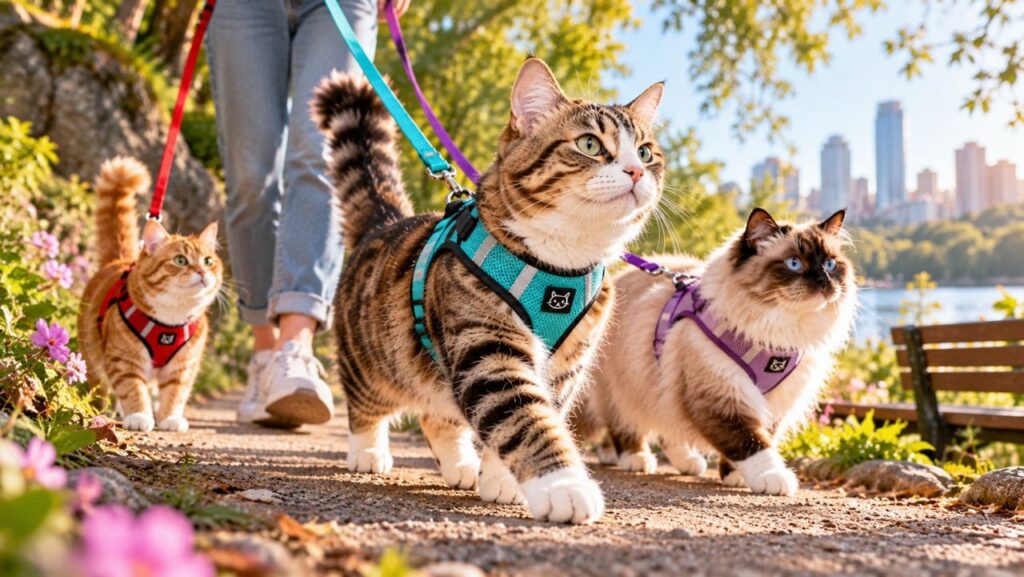
Walking Tips
- Let her lead. She will stop, sniff, and wander. That’s the whole point.
- Pick quiet times and places. Early mornings or evenings tend to be calmer.
- Avoid dogs, traffic, and crowds, especially at first.
- Bring treats to reward calm behavior.
- Watch for hazards like chemicals, plants, and sharp objects.
- Check for ticks and fleas after each outing.
- Carry your cat home if she’s tired or scared.
- Never use the leash to pull or punish.
- Don’t let her eat plants from the ground, since some are toxic.
The Bottom Line
Walking a cat is possible, but it takes patience, the right gear, and a cat who’s up for it. Start slow, choose a secure harness, and let your cat set the pace. If she loves it, you’ve gained a new way to bond. If she doesn’t, that’s okay too, because plenty of cats prefer a sunny window and a good bird show. Either way, she’ll never be a dog, and she’ll want you to know it.
Disclaimer: This article is for general informational purposes only and is not a substitute for professional veterinary advice. Talk to your veterinarian before taking your cat outdoors, and make sure your cat is vaccinated and protected against parasites. No harness is escape-proof, so always supervise closely. Product details and availability can change, so check each listing before buying.