If you’ve ever looked at your cat and thought, “Are you happy… or planning my downfall?” — welcome. You’re officially ready for Cat Body Language 101.
Cats don’t communicate like humans (no long emotional speeches, thank you). They communicate with tiny signals: a tail twitch, an ear swivel, a slow blink, a stare that feels oddly personal.
The tricky part is that one signal alone doesn’t always mean one thing. A flicking tail isn’t always anger. Big eyes aren’t always fear. Cats are subtle — and sometimes dramatic — so you have to read the whole picture.
This guide will help you decode what your cat’s tail, ears, and eyes are really saying, so you can:
- avoid surprise bites (your hands will appreciate it)
- recognize stress early
- build trust faster
- know when your cat is actually enjoying the cuddles
Let’s translate Cat into Human.
The golden rule: look at the combo, not one body part
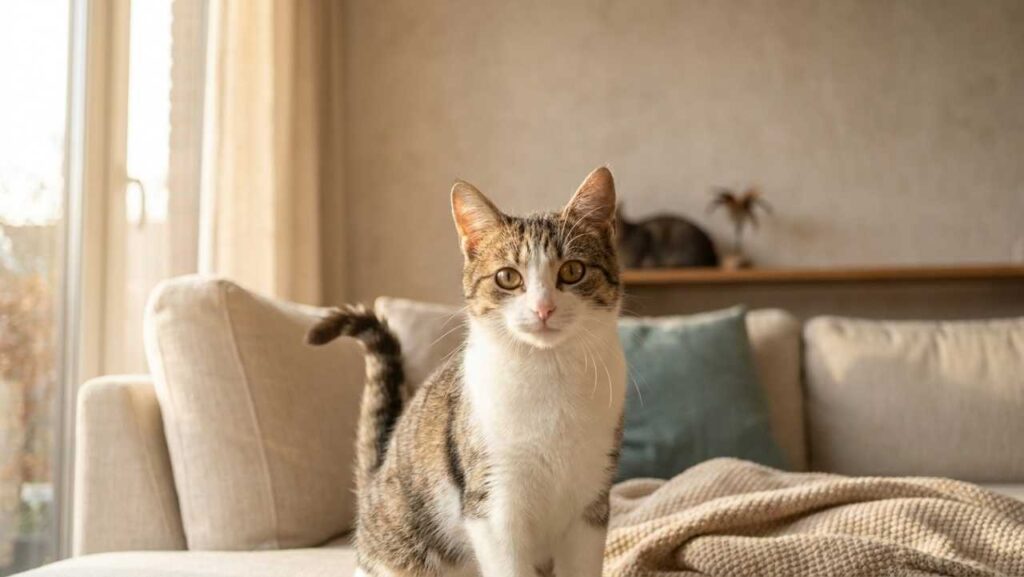
Think of your cat like a living emoji. One feature isn’t enough.
To understand what’s going on, check:
- Tail (energy + mood)
- Ears (attention + comfort)
- Eyes (trust + stress)
- Body posture (loose vs tense)
- Context (petting? visitors? vet carrier? vacuum cleaner?)
Now let’s break down the main three: tail, ears, eyes.
Cat tails: the mood meter (and occasional lie detector)
Cats use their tails like an emotional antenna. Here’s what the most common tail signals usually mean.
1) Tail held high (like a flag)
What it often means: friendly, confident, comfortable
A cat walking toward you with a tail straight up is basically saying:
“Hello. I am feeling social. You may admire me now.”
Bonus detail:
- If the tail tip curls like a question mark, it’s often extra friendly.
2) Tail straight up + vibrating/shivering
What it often means: excited greeting, happy arousal
This happens when you come home or when your cat is really pleased.
Important: Sometimes it can also be a sign of spraying/marking in certain contexts (especially around walls). Context matters.
3) Tail low or tucked
What it often means: nervous, unsure, frightened
A low tail doesn’t automatically mean your cat is “sad.” It usually means:
- the situation feels unsafe
- your cat is trying to be small and cautious
If the tail is tucked tightly under the body, that’s stronger fear.
4) Tail puffed up (the classic “bottle brush”)
What it often means: fear + adrenaline
Your cat is trying to look bigger. This is a cat’s version of:
“I’m not scared. I’m just… prepared.”
Common triggers:
- sudden loud noises
- another cat
- unfamiliar visitor
- being startled awake
If you see this, give space and let your cat calm down.
5) Tail swishing back and forth (big dramatic swings)
What it often means: overstimulated, annoyed, conflicted
Dogs wag when happy. Cats swish when irritated.
A big tail swish is often your cat saying:
“I’m done with this interaction, but I’m trying to be polite.”
If you keep petting through this signal, you may get the classic:
- bite (small but meaningful)
- swat (with or without claws)
- sudden escape like you offended them spiritually
6) Tail tip twitching (small flicks)
What it often means: focused, excited, mildly irritated
This can show up during:
- hunting play
- watching birds
- intense concentration
It can also be a sign your cat is getting overstimulated. Pair it with ears/eyes and posture.
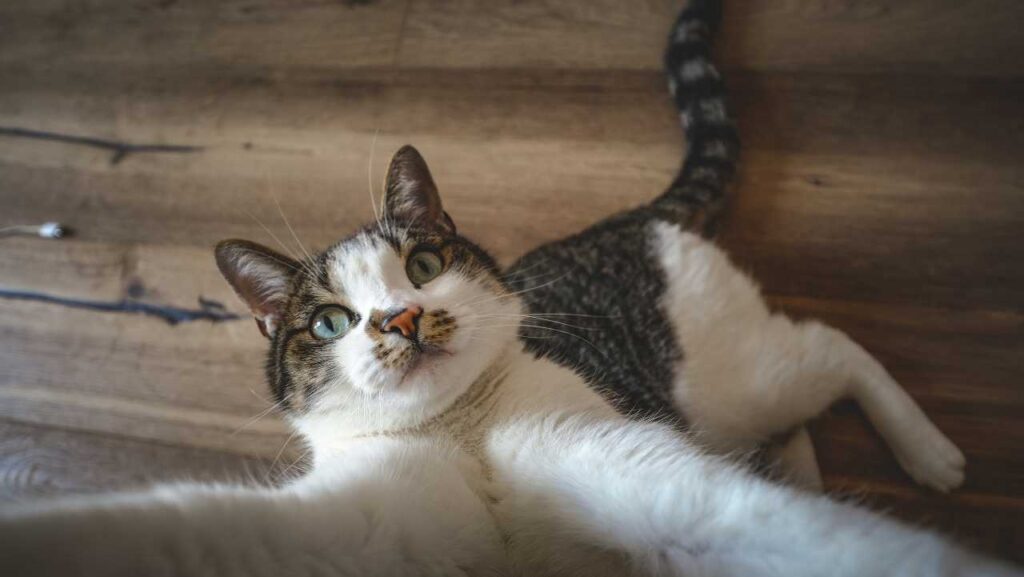
Cat ears: the direction of attention (and warning labels)
Ears are one of the fastest ways to tell if a cat is relaxed or stressed.
1) Ears forward
What it often means: curious, interested, relaxed
Your cat is engaged with the environment.
2) Ears swiveling like radar dishes
What it often means: tracking sounds, alert
Cats can hear frequencies we miss, so your cat may be reacting to:
- a distant door
- a bug
- a neighbor
- a charger making a tiny high-pitched noise
This is normal and often just “information gathering.”
3) Ears sideways (“airplane ears”)
What it often means: unsure, irritated, overstimulated
Airplane ears are a classic warning sign. Your cat is uncomfortable.
If airplane ears appear during petting, your cat is likely nearing the “no thank you” stage.
4) Ears pinned back flat
What it often means: fear, high stress, defensive mode
This is more intense than airplane ears.
If you see pinned ears plus a tense body, growling, hissing, or a puffed tail — back off.
5) One ear forward, one ear back
What it often means: conflict or split attention
Your cat is monitoring two things at once:
- you + a sound
- food + another cat
- cuddles + the vacuum’s distant threat
This can be totally normal, but it can also show mild stress depending on the situation.
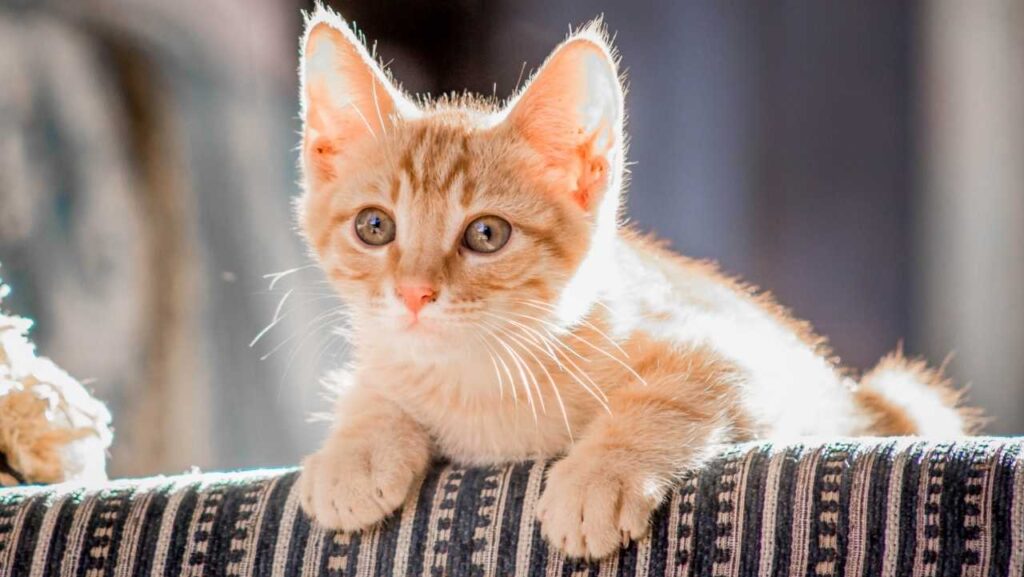
Cat eyes: trust, stress, and “I’m judging you”
Cat eyes are powerful. They can also be misunderstood.
1) Slow blinks
What it often means: trust, comfort, friendliness
Slow blinking is one of the best signs your cat feels safe.
Try it:
Look softly at your cat, slow blink, look away. It’s like saying “I’m friendly” in Cat.
2) Soft, relaxed eyes (half-lidded)
What it often means: calm, content
You’ll often see this when:
- your cat is sleepy
- sitting comfortably near you
- purring and relaxed
3) Big pupils (dilated)
What it can mean: excitement or fear
Dilated pupils are not always bad. They show arousal/activation.
Common reasons:
- play mode (especially zoomies)
- low light
- surprise
- fear or stress
If pupils are huge and your cat’s body is tense, ears are back, or tail is puffed: that’s fear.
If pupils are huge and your cat is bouncing around with playful energy: that’s excitement.
4) Hard stare (unblinking)
What it often means: intense focus, warning, or challenge
A hard stare between cats can be a form of tension.
A hard stare at you can mean:
- your cat is hunting a toy
- your cat is annoyed
- your cat is trying to control the situation (yes, really)
If a cat feels threatened, staring can be part of “don’t come closer.”
5) Wide eyes + ears back
What it often means: fear
This is a common “I’m not okay” combo.
If your cat looks like this, give space and reduce stimulation.
Bonus body language clues (because cats are full sentences)
Tail/ears/eyes are big — but these extra signals help you read the full message.
Relaxed body
- loose posture
- weight resting comfortably
- normal grooming
Tense body
- crouched low
- muscles tight
- ready to run or swat
Rolling over (belly exposed)
Often means comfort — not always permission.
Many cats are saying:
“I trust you enough to show my belly.”
Not:
“Please rub my belly like a dog.”
Purring
Usually happy… but sometimes purring can also happen with stress or pain.
Check the rest of the body language.
Kneading
Usually comfort and self-soothing. It’s like your cat is making biscuits for emotional reasons.
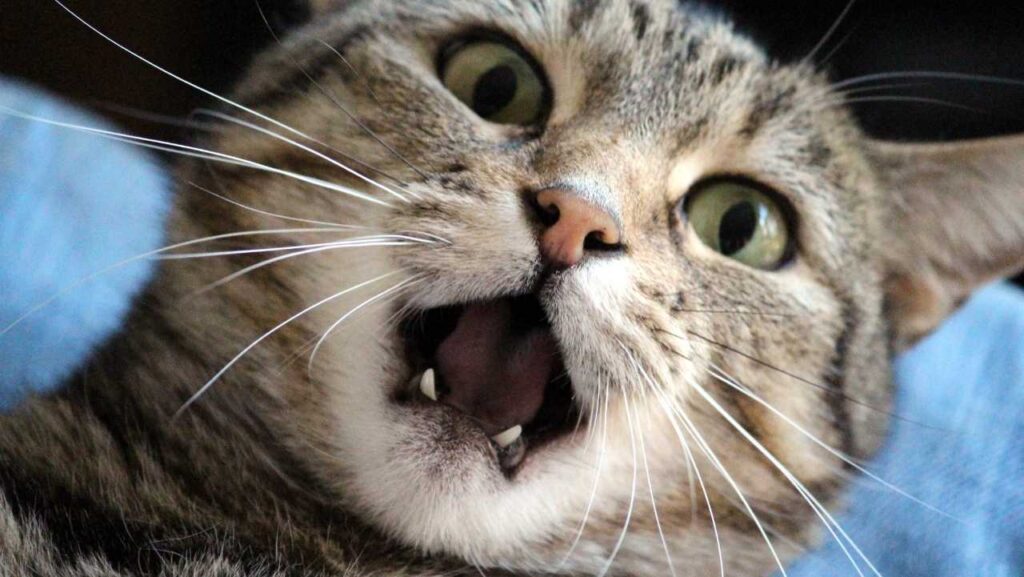
Common “cat mood” combos (quick cheat sheet)
Here are some frequent combinations you’ll see:
“Happy and social”
- tail up
- ears forward
- soft eyes / slow blinks
- relaxed body
“Overstimulated during petting”
- tail swishing
- ears sideways
- pupils bigger
- skin twitching on the back
Fix: stop petting, give a break, and let your cat re-initiate.
“Play/hunt mode”
- crouch + wiggle
- tail tip twitch
- big pupils
- intense focus
Fix: give a proper toy to “catch.” Don’t use hands as prey.
“Scared/defensive”
- ears pinned
- puffed tail
- wide eyes
- low crouch
Fix: back off, remove the stressor if possible, offer a safe hiding spot.


How to respond in a way your cat actually likes
Reading signals is only half the job. The other half is responding correctly.
1) Let your cat choose the pace
Cats trust faster when they control the distance.
2) End petting before the “tail swish stage”
A good rule: stop while it’s still good.
3) Offer the right kind of affection
Many cats prefer:
- cheek rubs
- chin scratches
- head scratches
Over:
- full-body rubbing
- belly rubs
4) Use play to build confidence
Play is bonding and stress relief.
Try 5–10 minutes daily with a wand toy.
When body language changes suddenly
If your cat’s signals change abruptly (suddenly hiding, suddenly aggressive, suddenly avoiding touch), consider:
- pain (dental, arthritis)
- illness
- stressors in the environment
Cats don’t always show pain clearly. Behavior is often the first clue.
Final take
Cats aren’t “mysterious” — they’re just speaking a language made of tail flicks, ear angles, and dramatic eye contact.
Once you start watching the patterns, you’ll get better at predicting your cat’s mood, avoiding overstimulation, and building trust.
And yes, sometimes your cat will still stare at you like you owe them money.
That’s normal too.