Every multi-person household with a cat has had this exact conversation: “the cat clearly likes me more,” followed immediately by someone else in the house insisting that’s not true, actually, the cat obviously prefers them. Somehow, both people usually have a compelling case, complete with photo evidence of lap-sitting and dramatic reenactments of who the cat greets first at the door.
Yes, cats genuinely do form stronger attachments to specific people, and research on feline behavior supports this, though “favorite” is less about pure preference and more about who provides the most consistent security, positive interaction, and low-pressure attention. It’s not random, and it’s not really a popularity contest either, even though it can feel like one.
Let’s look at what’s actually going on.
The Research Backs This Up
Studies on cat-human attachment have found that cats form genuine attachment bonds with their owners, similar in structure to the attachment styles seen in human infants and dogs, just expressed differently. Cats in these studies showed distinct behavioral patterns depending on their relationship with a specific person, suggesting real, individualized bonds rather than generic affection spread evenly across every human in the house.
This lines up with what most multi-person households already suspect: cats aren’t just tolerating everyone equally, they’re actually forming distinct relationships with different people.

So What Makes Someone the “Favorite”?
A cat’s favorite person usually isn’t determined by who loves them the most (sorry to the person who buys all the treats and still gets ignored). Instead, it tends to come down to a handful of consistent factors:
Consistency of Care
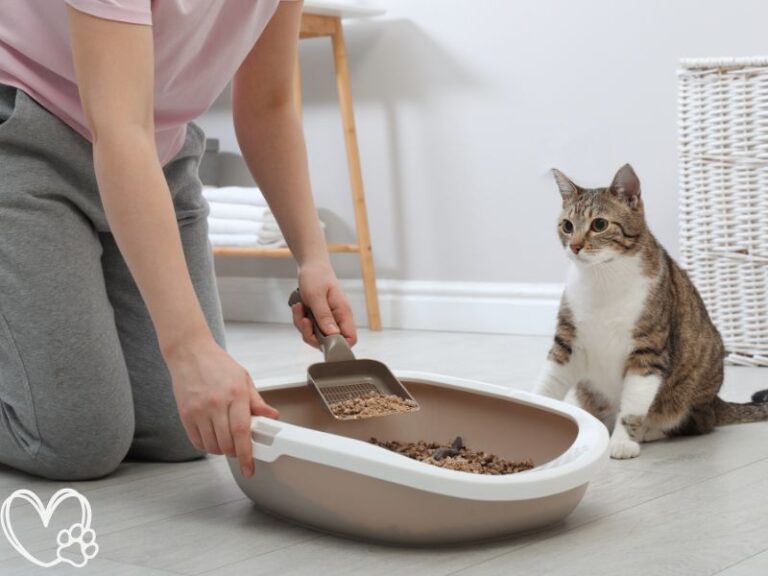
Cats are creatures of routine, and the person who reliably feeds them, cleans the litter box, or maintains a predictable schedule often becomes a source of security, simply because they represent stability. It’s less romantic than “true love” and more “you are reliably associated with dinner appearing on time,” which, to be fair, is a pretty solid foundation for a relationship.
Respecting Boundaries
Cats gravitate toward people who let them approach on their own terms rather than constantly initiating contact. Someone who respects a cat’s space, doesn’t force pick-ups or cuddles, and lets the cat choose when to engage often becomes more trusted over time, even if they seem “less affectionate” on the surface.


Calm, Low-Intensity Energy
As covered in plenty of cat behavior research, cats respond better to calm, quiet energy than loud, sudden, or overly enthusiastic interaction. The person in the house with the most relaxed presence, slower movements, and softer voice often ends up as the preferred choice, since it simply feels safer from a feline perspective.
Positive Associations Over Time
Repeated positive interactions, treats, gentle play, quiet company, build a cumulative sense of trust. A person who’s consistently a source of comfort (rather than occasional startling events like vet trips or nail trims) tends to rank higher on the favorite-person scale over time.
Signs You Might Be the Favorite
If you’re wondering where you stand in the household ranking, a few behavioral signs tend to point to “favorite person” status:
- Your cat seeks you out specifically, following you room to room rather than just wherever the household activity happens to be.
- They sleep near or on you more than other family members, especially choosing your lap or side of the bed consistently.
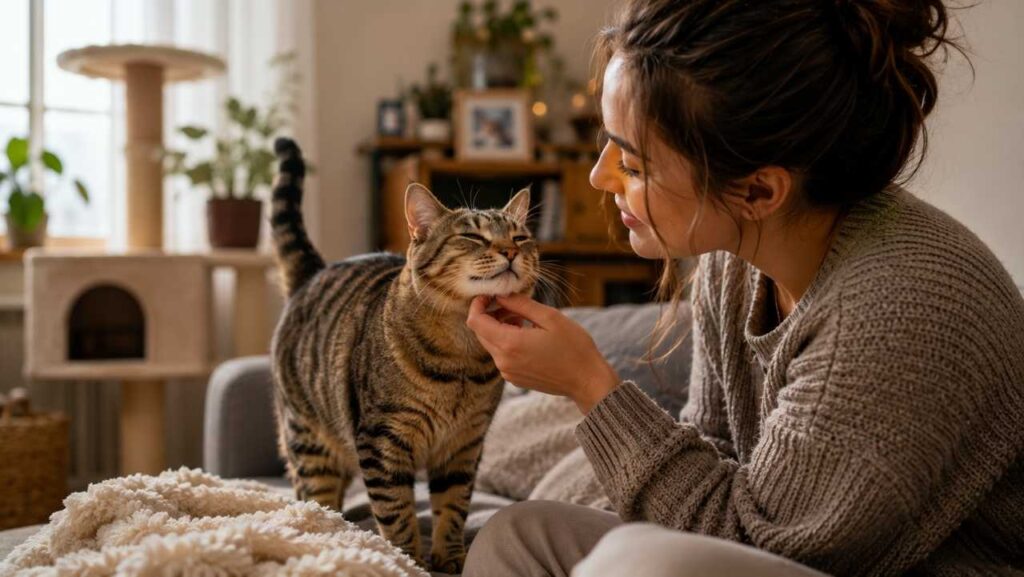
- Slow blinking directed at you. This relaxed, trusting gesture is a strong indicator of comfort and affection specifically toward you.
- Bringing you “gifts” (toys, occasionally a very unfortunate bug) is a behavior rooted in provider instincts, often directed at whoever the cat considers closest.
- Kneading or head-butting you specifically, both of which are affiliative behaviors cats reserve for people they feel safest with.
- Greeting you first when you come home, even if others are also present.


Does This Mean the Cat Dislikes Everyone Else?
Not necessarily. Having a favorite person doesn’t mean a cat dislikes the rest of the household, it just means their attachment style and comfort level vary by individual, the same way humans naturally feel closer to some people than others without disliking everyone else. A cat can be perfectly happy living with multiple people while still gravitating toward one specific person during naps, stress, or unstructured downtime.
Can the “Favorite” Change Over Time?
Yes, and this happens more often than people expect. Life changes, a new baby, a move, a shift in someone’s schedule or role in the household, can shift which person becomes the primary source of comfort and consistency for a cat. It’s not necessarily a reflection of anything you did wrong, cats are simply responsive to the current dynamics of their environment, and their preferences can adapt right along with it.
What If You Want to Become the Favorite?
If you’re hoping to shift the dynamic (no judgment, we’ve all been there), a few evidence-backed strategies can help:
- Let the cat approach you, rather than initiating contact yourself every time.
- Use slow blinks during calm moments to build trust signals in a language your cat actually understands.
- Be consistent with feeding or care routines if you’re able to take on more of that responsibility.
- Offer low-pressure play sessions using wand toys, which build positive associations without forcing physical contact.
- Stay calm and predictable, especially during moments that might otherwise feel stressful to your cat, vet visits, loud noises, new people.
Patience matters here more than grand gestures. Trust tends to build gradually through repeated small, calm interactions rather than a single big effort.


The Bottom Line
Cats absolutely do form real, distinct attachments to specific people, and it’s not just a cute exaggeration households like to argue about. Whoever earns “favorite person” status usually does so through consistency, respect for boundaries, and calm, low-pressure interaction rather than sheer enthusiasm alone. So if you’ve lost the household favorite-person contest, don’t take it personally, it’s less about who loves the cat most and more about who the cat has decided to trust the most. The good news: that ranking isn’t permanent, and a little patience (and a lot of slow blinking) can absolutely shift the dynamic in your favor.