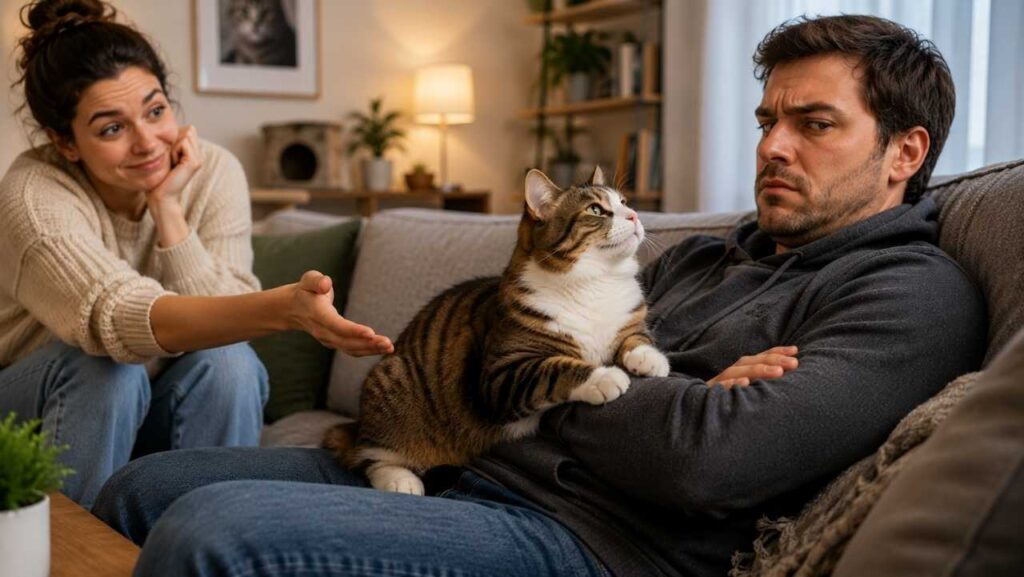
You’ve seen it happen. A room full of people, half of them cooing and holding out treat-covered hands, and the cat walks straight past every single one of them to sit directly on the lap of the one guest who’s allergic, mildly afraid of cats, or has just announced they “don’t really get the whole cat thing.” It’s not your imagination, and it’s not cats being contrarian for sport (though it does look that way).
Cats tend to gravitate toward people who ignore them because non-cat-lovers give off calmer, less intense body language, which reads as safer and less threatening to a cat’s instincts than direct, enthusiastic attention. It’s less “the cat loves a challenge” and more “the cat is reading the room, quite literally, better than we give them credit for.”
Let’s break down what’s actually happening.
Direct Eye Contact Isn’t Friendly, It’s Confrontational
Here’s the twist: in cat language, prolonged direct eye contact isn’t a warm greeting, it’s closer to a challenge or a threat. Most cat lovers, in their enthusiasm, do exactly the wrong thing — they stare adoringly right into the cat’s eyes and lean in for pets before any real introduction has happened. To a cat, this can read as intense, even a little aggressive, especially from a total stranger.
Meanwhile, the non-cat-person in the room is usually avoiding eye contact entirely, sitting still, and generally not paying the cat any attention at all. In feline terms, that’s basically the calmest, least threatening body language a stranger can offer.



Slow Blinks vs. Full-On Staring
Cat lovers often instinctively want to make eye contact to “connect,” but cats communicate calm trust through slow blinks, not sustained staring. A person who isn’t trying to engage with the cat at all naturally avoids the intense stare-down, which unintentionally mimics the relaxed, non-threatening signals cats actually respond well to.
It’s a bit like how a person who’s nervous around dogs often stands still and avoids sudden movement, which paradoxically can make some dogs less anxious around them too. Cats operate on a similar principle, just with different specific cues.
No Sudden Movements, No Grabbing
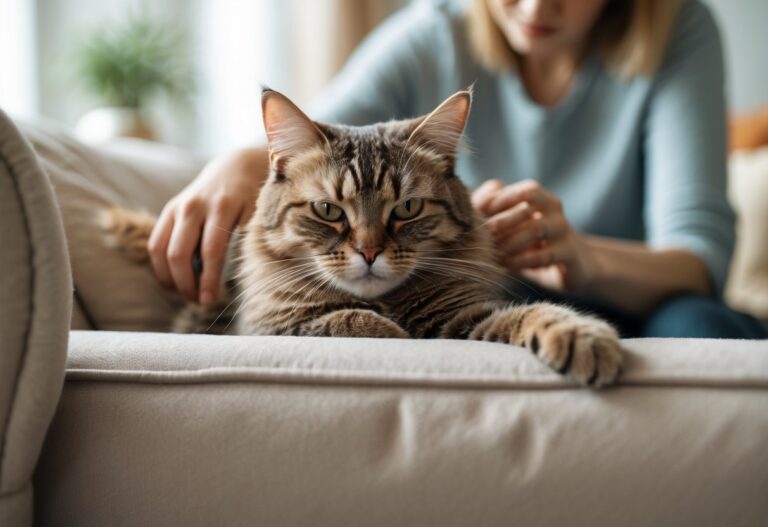
Enthusiastic cat lovers tend to reach out fast, sometimes trying to pick the cat up immediately or pet them before the cat’s had a chance to sniff and assess. Cats are naturally cautious around fast, unpredictable movement, since it can mimic the kind of motion a predator (or an overly excited toddler) might make.
The reluctant guest, on the other hand, usually keeps their hands to themselves entirely, sits still, and generally behaves like a piece of furniture. Cats, being cautious creatures who like to approach things on their own terms, often find “furniture that doesn’t move or grab” much more approachable than “enthusiastic human who keeps trying to scoop me up.”


Cats Like to Choose, Not Be Chosen
A huge part of feline social behavior revolves around control and choice. Cats generally prefer to approach on their own terms rather than be approached, especially by someone new. When a cat-loving guest leans in immediately, hands out, cooing, it removes that sense of choice from the interaction. The cat feels pursued rather than in control.
The person ignoring the cat, meanwhile, is unintentionally offering the cat full control over the interaction. Approach or don’t, sit nearby or don’t, sniff a hand or don’t — it’s entirely up to the cat. For a species that values autonomy this much, that’s an unusually appealing offer.
The Novelty Factor
There’s also a simpler explanation running alongside the body language piece: familiarity. If you have cat-loving friends who visit often, your cat may have simply run out of curiosity about them. The person who rarely visits, or actively avoids the cat, represents something new and unexplored, which taps into a cat’s natural curiosity about novel people and situations.


It’s Not Personal (Even Though It Feels Extremely Personal)
If you’re a devoted cat person who’s been snubbed in favor of your cat-avoidant friend, the instinct to take it personally is understandable. But this isn’t a reflection of who loves cats more or who the cat “prefers” as a person, it’s a reaction to specific, readable behavior in the moment. Change the behavior, and you can often change the outcome.
How to Get the Cat to Choose You Instead
If you want to be the exception — the enthusiastic cat lover who actually gets chosen — try borrowing a page from the reluctant guest’s playbook:
- Avoid direct eye contact at first. Look slightly away or do a slow blink instead of a hard stare.
- Let the cat approach you. Sit down, ignore them for a bit, and let curiosity do the work instead of reaching out first.
- Offer a hand low and still, rather than reaching toward their face immediately. Let them sniff and decide.
- Skip the enthusiastic scoop-up. As tempting as it is, save the cuddling for after the cat has actually opted in.
- Be patient. Cats often warm up over multiple visits rather than a single encounter, especially with people they don’t see often.
Why This Actually Makes Cats Easier to Understand
Once you know the pattern, it stops feeling random and starts feeling almost predictable. Cats aren’t rejecting affection, they’re responding to specific behavioral cues, the same way they’d respond to any other animal’s body language in the wild. Understanding this doesn’t just explain the awkward party moment, it can genuinely help you build trust faster with any new or nervous cat you meet going forward.
The Bottom Line
Your cat isn’t betraying you by curling up on your cat-hating friend’s lap, they’re just responding to calm, low-pressure body language in a way that makes complete sense from a feline perspective. The good news is you can borrow those same signals yourself, slow blinks, patience, and letting the cat make the first move, and eventually earn that same spot. It might just take your cat a little longer to trust someone who’s clearly, obviously, enthusiastically obsessed with them. Cats do love to keep us humble.