Cat Vaccinations? Somewhere between “core vaccines,” “non-core vaccines,” and your vet casually mentioning FVRCP like you should already know what that means, it’s easy to walk out of an appointment more confused than when you walked in. Vaccinations are one of those topics that sounds simple until you actually try to figure out what your specific cat needs and why.
Most cats need a small set of “core” vaccines that protect against serious, widespread diseases, plus possibly a few “non-core” vaccines depending on their lifestyle, like whether they go outdoors or live with other cats. Here’s a clear breakdown of what’s actually going on, without the jargon overload.
Core vs. Non-Core: The Basic Split
Veterinary guidelines generally sort vaccines into two categories:
- Core vaccines are recommended for virtually every cat, regardless of lifestyle, because the diseases they protect against are serious, widespread, and pose a genuine risk even to indoor-only cats.
- Non-core vaccines are recommended based on individual risk factors: whether your cat goes outside, lives in a multi-cat household, boards frequently, or has other specific exposure risks.
Your vet will typically build a vaccination plan around the core group first, then add non-core vaccines based on your cat’s actual lifestyle rather than a one-size-fits-all list.
The Core Vaccines
FVRCP (the “distemper” combo shot)
This one’s actually a combination vaccine protecting against three separate diseases:
- Feline Viral Rhinotracheitis (FVR) — a herpesvirus causing respiratory infection
- Calicivirus — another major cause of upper respiratory disease in cats
- Panleukopenia — often called feline distemper, a severe and highly contagious viral disease
This combo shot is considered essential for every cat, since all three diseases are common, highly contagious, and can be serious, especially in kittens.
Rabies
Rabies vaccination is core both because it’s a genuinely fatal disease with no cure once symptoms appear, and because it’s a public health concern — many regions legally require it. Even indoor cats can be exposed if a bat gets into the house or an escape happens, so this isn’t a “just for outdoor cats” situation.
The Non-Core Vaccines
FeLV (Feline Leukemia Virus)
Highly recommended for kittens and cats with any outdoor access or exposure to other cats of unknown vaccination status, since FeLV spreads through close contact like grooming, shared food bowls, or bite wounds. Many vets recommend it as a baseline for kittens regardless of lifestyle, then reassess need as the cat matures into a confirmed indoor-only routine.
Chlamydophila felis
Sometimes recommended in multi-cat households or shelter environments, where this bacterial infection (which causes conjunctivitis) can spread more easily due to close, frequent contact.
Bordetella
Occasionally recommended for cats in high-density environments like shelters or boarding facilities, similar to the “kennel cough” vaccine familiar to dog owners, though it’s less commonly needed for typical household cats.
FIV (Feline Immunodeficiency Virus)
Less commonly recommended today than in past years, largely because testing accuracy and effectiveness considerations have shifted how vets approach it. This is very much a “discuss with your vet based on your specific cat’s risk” vaccine rather than a default recommendation.
Kitten Vaccination Schedule: The Basics
Kittens generally need a series of vaccinations rather than a single shot, since maternal antibodies (protection passed from their mother) can interfere with vaccine effectiveness early on, and this protection fades at different rates for different kittens. A typical schedule involves:
- Starting around 6–8 weeks: first round of FVRCP
- Booster shots every 3–4 weeks until around 16 weeks of age
- Rabies vaccine typically given around 12–16 weeks, depending on local regulations
- FeLV often started around this same window if recommended for your kitten’s situation
This is a general framework — your vet will tailor exact timing to your specific kitten and local requirements.
Adult Cat Vaccination Schedule: The Basics
Once your cat completes their kitten series, most core vaccines move to a less frequent schedule, often every one to three years depending on the specific vaccine and your vet’s protocol. This is one of the best reasons to keep up with annual or biannual checkups even for a seemingly healthy adult cat — it’s usually when boosters get reviewed and scheduled.
“But My Cat Is Indoor-Only, Do They Really Need All This?”
This is one of the most common questions vets hear, and it’s a fair one. The honest answer: indoor cats still need core vaccines, since diseases like panleukopenia can be brought into the home on shoes, clothing, or other objects, and unexpected exposure (an open door, a trip to the vet, a boarding stay) happens more often than owners expect. Non-core vaccines, on the other hand, are exactly where lifestyle matters most — a strictly indoor cat with no other animals in the home is a very different risk profile than one who goes outside or lives with several other cats.
Are There Side Effects?
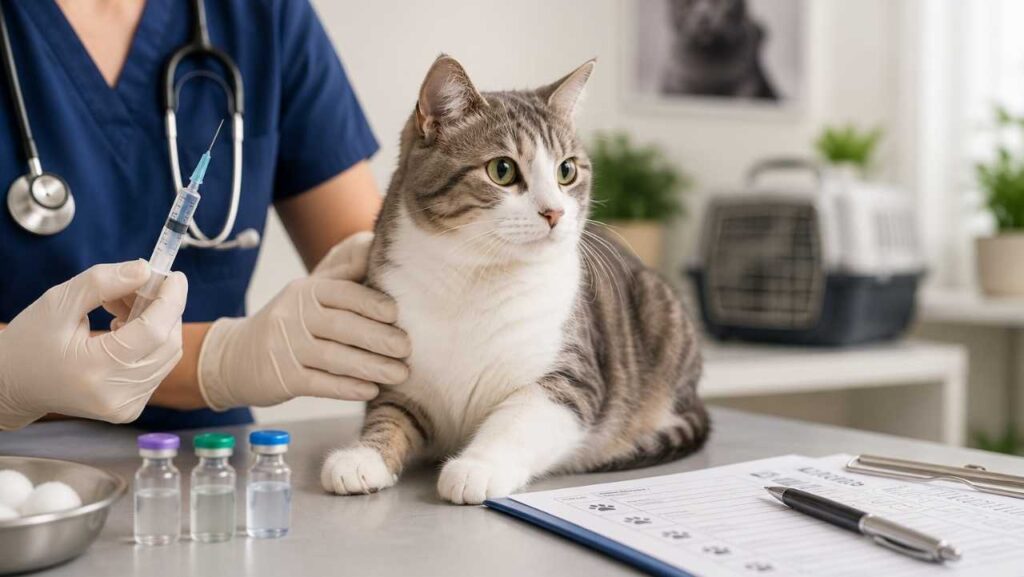
Most cats handle vaccines well, with mild, short-term effects like slight lethargy, a temporary lump at the injection site, or reduced appetite for a day. Serious reactions are uncommon but not impossible, which is why vets typically recommend monitoring your cat for the rest of the day after a vaccine appointment. If you notice persistent vomiting, difficulty breathing, or facial swelling, that warrants an urgent call to your vet rather than a wait-and-see approach.


Why a One-Size-Fits-All Schedule Doesn’t Really Exist
Vaccine recommendations vary based on your cat’s age, health history, lifestyle, and even regional disease prevalence, which is exactly why “just tell me what my cat needs” doesn’t have a single universal answer. Your vet is genuinely the best resource here, since they can weigh your specific cat’s risk factors rather than applying a generic checklist.
The Bottom Line
Vaccines aren’t just a formality tacked onto a vet visit, they’re one of the most effective tools available for preventing serious, sometimes fatal diseases your cat could otherwise be exposed to without you ever realizing it. Core vaccines cover the essentials for every cat, and non-core vaccines fill in the gaps based on your cat’s actual lifestyle. The best move is a conversation with your vet about your specific cat’s situation, rather than trying to piece together a plan from the internet (yes, including this post). Your cat may still act personally betrayed at the vet’s office regardless of how medically necessary the visit was. Some things about cats really are universal.