A cat who suddenly stops using the litter box can make any cat owner panic — and honestly, that’s the correct reaction.
Not because your cat is “being spiteful” (cats don’t do revenge the way humans imagine), but because litter box changes are often your cat’s way of saying:
“Something is wrong. Please investigate.”
Sometimes it’s a simple fix (wrong litter, dirty box, scary location). Sometimes it’s medical (pain, urinary issues). Either way, the faster you respond, the easier it is to solve — and the less likely the behavior becomes a stubborn habit.
Let’s go through the most common causes, what to do right away, and how to set up a litter box situation your cat actually wants to use.
First: when this is an emergency
If your cat is straining to pee, visiting the litter box repeatedly with little or no urine, crying, licking the genital area, or acting suddenly lethargic — treat it as urgent and contact a vet ASAP.
Urinary blockage (especially in male cats) can become life-threatening quickly.
Also call your vet sooner rather than later if:
- your cat has blood in urine
- there’s vomiting, loss of appetite, or hiding
- your cat is older or has known health issues
- the behavior started suddenly and you can’t find a clear reason
Even if your cat seems “fine,” it’s still worth checking. Cats are masters of pretending everything is fine while quietly feeling terrible.


Why cats stop using the litter box (the big categories)
Most litter box problems fall into one (or more) of these buckets:
- Medical problems (pain, urinary issues, arthritis, digestive problems)
- Litter box setup problems (dirty box, wrong litter, box too small, wrong type)
- Location problems (too noisy, too hidden, ambush spots)
- Stress or conflict (new pet, new baby, moves, multi-cat tension)
- Preference changes (your cat’s opinion changed overnight and now you must adapt)
Let’s break these down with practical fixes.
1) Medical causes (the most important to rule out)
If your cat is suddenly peeing outside the box, assume there could be a medical reason until proven otherwise.
Common medical culprits
- Urinary tract infection (UTI) or inflammation
- Feline idiopathic cystitis (FIC) (stress-related bladder inflammation)
- Urinary crystals or stones
- Kidney disease (more urination, urgency)
- Diabetes (increased thirst/urination)
- Constipation or diarrhea
- Arthritis or pain (hard to climb into the box)
Why medical issues cause “accidents”
If peeing hurts, your cat may start associating the litter box with pain.
They’re not thinking “I will pee on the rug to punish you.”
They’re thinking “Last time I went there, it hurt. I’m avoiding that place.”
What to do
- Call your vet and describe what’s happening (pee vs poop, frequency, straining, blood, behavior changes).
- If possible, bring a fresh urine sample (your vet can tell you how to collect one).
- Don’t wait weeks hoping it goes away — these issues can worsen.
If medical causes are ruled out or treated and the problem continues, move on to environmental fixes too (often it’s both).

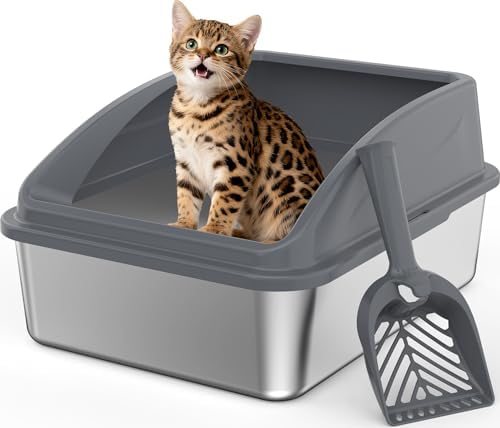
2) The litter box is “wrong” (according to your cat)
Cats are clean, picky, and very consistent — until something changes.
The box is too dirty
This is the most common and easiest to fix.
Cats prefer a clean bathroom. (So do we, but we don’t always express it by peeing behind the sofa.)
Fix:
- Scoop at least once daily (twice is even better).
- Empty and wash the box regularly (mild soap, no harsh cleaners).
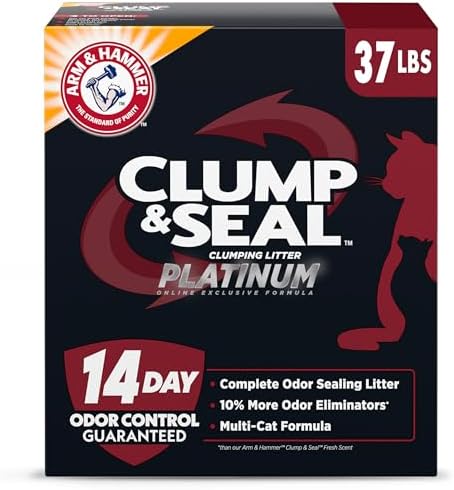
The litter isn’t acceptable anymore
Cats can be weirdly specific about litter texture and smell.
Common triggers:
- switching litter brands suddenly
- strongly scented litter
- dusty litter (irritates nose)
- rough/crunchy pellets that feel bad on paws
Fix:
- If you recently changed litter, go back to the old one if possible.
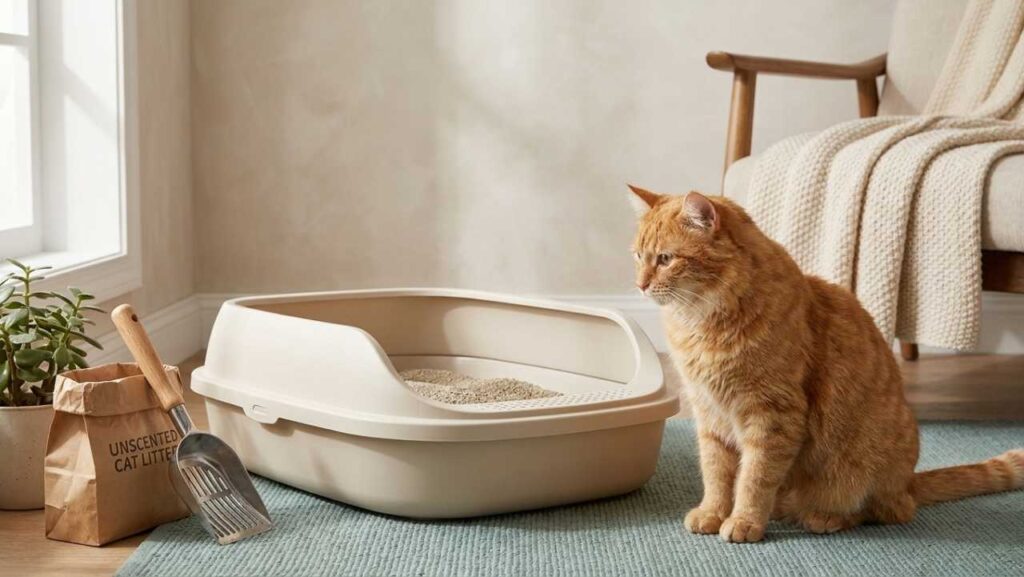
- Choose unscented, low-dust litter.
- Transition slowly when changing litters (mix old/new over 7–10 days).


The box is too small
Many litter boxes are designed for “average cat size” which… apparently does not include real cats.
Your cat should be able to comfortably turn around.
Fix:
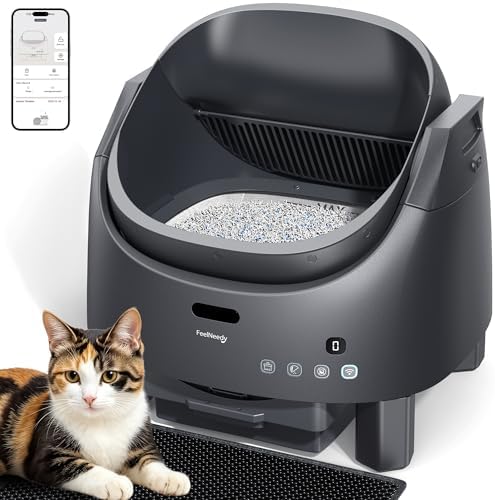
- Try a larger box (even a storage bin can work as a budget upgrade).
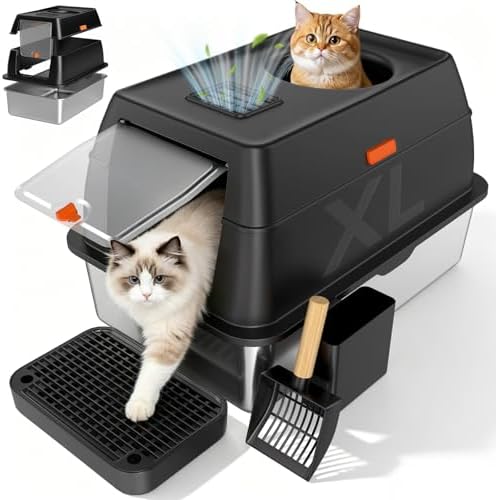
Covered boxes can be a problem
Some cats love privacy; others feel trapped.
Covered boxes can:
- trap odor
- feel unsafe (no escape route)
- be noisy if other pets are nearby
Fix:
- Offer one uncovered box as an option and see what your cat chooses.
Liners and scented deodorizing powders
Some cats hate the crinkly feel of liners or the smell of additives.
Fix:
- Remove liners and powders if used.
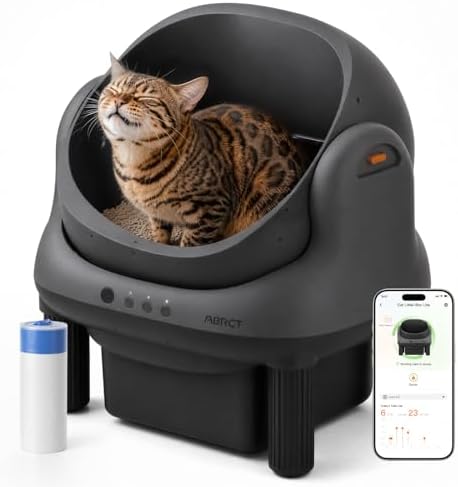
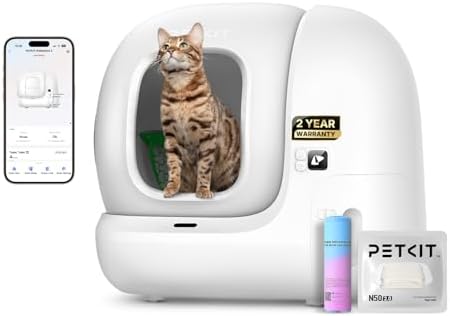
3) Location problems: the litter box is in a “bad neighborhood”
A litter box location that seems fine to you can feel unsafe to a cat.
Common bad locations
- next to loud appliances (washer/dryer)
- near a door that slams
- in a tight corner where a cat can be ambushed
- near a barking dog’s favorite route
- too far away, especially for seniors
Fixes
- Put the box in a quiet, accessible area.
- Avoid dead ends. Cats like a clear exit.
- If you have multiple floors, place boxes on multiple levels.
If your cat is eliminating right next to the box, that’s a clue: they’re trying, but something about the setup is off (litter, cleanliness, height, fear).


4) Stress and routine changes (yes, cats get feelings)
Cats are creatures of routine. Change can trigger litter box issues even in a “healthy” cat.
Stressors include:
- moving
- new furniture or remodeling
- new pet (or even a neighbor cat outside)
- visitors staying over
- a baby
- schedule changes
Fixes for stress-related litter box issues
- Keep routines steady (feeding, play time).
- Add enrichment (interactive play 5–10 minutes daily).
- Provide safe hiding spots and vertical space.
- Consider pheromone diffusers/sprays.
If there’s conflict between cats, read the multi-cat resource rule:
cats + 1 litter boxes, plus multiple feeding/water stations.
When cats don’t feel they need to compete, bathroom problems often improve.
5) Marking vs. “I really had to go”
Pee outside the box can be either:
A) Urination (needs-based)
Usually larger puddles, often on horizontal surfaces.
Often linked to medical issues, box problems, or stress.
B) Spraying (marking)
Usually smaller amount, on vertical surfaces (walls, furniture), tail often quivers.
More common in unneutered cats but can happen in neutered cats under stress.
Fixes for spraying
- Rule out medical issues first.
- Reduce stress and block views of outdoor cats.
- Clean with enzymatic cleaner.
- Consider additional resources and “safe zones.”
- Talk to your vet if behavior persists.
What to do today (a simple action plan)
Here’s a practical “do this first” plan:
Step 1: Vet check if this is sudden
Especially if it’s pee-related, frequent, painful, or unusual.
Step 2: Add one extra litter box immediately
Even temporarily.
Put the extra box in a new, quiet location.
Step 3: Make the boxes ultra appealing
- scoop now
- remove strong scents
- use unscented, soft litter
- make sure the box is large and easy to enter
Step 4: Clean accidents correctly
Use an enzymatic cleaner. Regular cleaners can leave scent traces that tell your cat “this is the bathroom now.”
Step 5: Observe patterns
Write down:
- pee or poop (or both)
- where it happened
- time of day
- any household changes
Patterns often reveal the cause.



Bonus: common “specific scenarios” and quick fixes
“My cat poops outside the box but pees inside.”
Often: constipation, pain, box aversion, or a dirty box.
Fix: vet check + larger/cleaner box + softer litter.
“My cat pees on the bed.”
Often: stress, separation anxiety, or urinary discomfort.
Fix: vet check + stress reduction + add boxes + keep bedroom calm.
“My senior cat is missing the box.”
Often: arthritis or mobility issues.
Fix: low-entry box, add a box closer to favorite resting spot, consider pain management via vet.
“My cat used the box for years and now refuses.”
Often: one small change (litter brand, box location, new household stress) or medical discomfort.
Fix: treat it like a mystery — undo recent changes, add options, vet check.
Final take
A sudden litter box change is your cat waving a tiny flag that says, “Help.”
Start with health, then fix the environment: clean boxes, easy access, the right litter, safe locations, and less stress. Most litter box problems are solvable — especially when you act quickly.
And remember: your cat is not being “bad.” Your cat is communicating. Unfortunately, the language is… pee.