
One day you bring home a tiny, wobbly kitten who fits in the palm of your hand. What feels like five minutes later, you’ve got a dignified adult cat who judges your every decision from the top of the bookshelf. Cats age faster than we do, and their needs shift noticeably at each stage, even if the “grumpy stare” stays remarkably consistent throughout.
Veterinarians generally break a cat’s life into six broad stages — kitten, junior, prime, mature, senior, and geriatric — each with its own typical behaviors, health priorities, and care needs. Knowing roughly where your cat sits on this timeline helps you catch changes early and adjust their care before small issues become bigger ones.
Here’s what to expect at each stage.
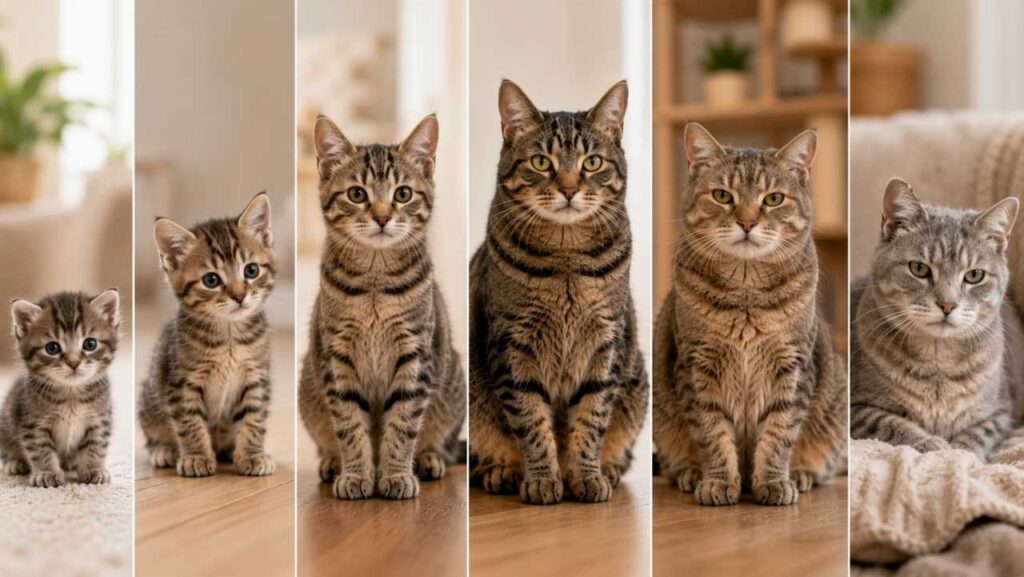
Kitten: Birth to 1 Year
This is peak chaos-energy season. Kittens are growing at an astonishing rate, both physically and behaviorally, and most of their waking hours are spent testing the boundaries of gravity, furniture, and your patience.
What to expect:
- Rapid growth, meaning high-calorie, nutrient-dense kitten food is essential
- Frequent, short bursts of intense play followed by sudden, dead-asleep naps
- A steep learning curve on litter box habits, scratching posts, and “no, the curtains are not a climbing structure”
- Core vaccinations and spay/neuter timing typically fall in this window
This is also the best window for socialization — exposing kittens to gentle handling, new people, and different sounds now pays off enormously in confidence later in life.



Junior: 1 to 2 Years
Physically, most cats reach adult size by around one year, but they’re still finishing up some behavioral maturing during this stage. Think of it as the feline equivalent of a college student: full-grown, technically an adult, but still occasionally making questionable decisions at 3 AM.
What to expect:
- Energy levels remain high, though play becomes a bit more purposeful and less completely feral
- Personality really starts to solidify during this window
- Transition from kitten food to adult formula typically happens early in this stage
- Still a great time to reinforce good habits, since behavior patterns are becoming more fixed
Prime: 3 to 6 Years
This is peak “adult cat” era — settled, confident, and usually at their most physically capable. Many cats in this stage have fully settled into their routines and quirks, for better or worse (looking at you, cats who insist on drinking only from the faucet).
What to expect:
- Stable energy and appetite, generally the easiest stretch for maintaining a consistent routine
- Annual vet checkups remain important even though most prime-age cats are the picture of health
- Weight management really matters here, since habits formed now often carry into later life stages
- A good stretch to establish enrichment routines (toys, scratching posts, climbing structures) that’ll serve them well as they age



Mature: 7 to 10 Years
Cats don’t get an obvious “middle age” milestone the way humans do, but subtle shifts often start here, even if your cat still acts fully like their younger self most days. This stage is sometimes where the first hints of slowing down begin to show, though they’re easy to miss if you’re not looking for them.
What to expect:
- Slightly reduced activity levels, though many mature cats are still quite playful
- The early window where conditions like dental disease, kidney issues, or early arthritis can start to develop
- A good time to start discussing more proactive bloodwork with your vet, even before obvious symptoms appear
- Diet may need small adjustments if activity has decreased, to avoid gradual weight gain
Senior: 11 to 14 Years
This is where the “golden years” really kick in, and where owners often start noticing real changes: a bit more hesitation before jumping, more time spent sleeping, maybe a slightly less enthusiastic reaction to that laser pointer they used to lose their mind over.
What to expect:
- Higher likelihood of arthritis, so easier litter box access and softer bedding become more important
- More frequent vet visits — many vets recommend every six months at this stage — since age-related conditions progress faster than owners expect
- Appetite and weight changes worth monitoring closely, since both weight loss and gain can signal underlying issues
- Continued mental engagement matters, even if physical play looks different (shorter, gentler sessions rather than the acrobatics of youth)


Geriatric: 15+ Years
Cats in this stage have genuinely earned their reputation as wise little elders. Many remain affectionate, food-motivated, and full of opinions well into their late teens (some cats live past 20), but their bodies typically need more support to keep up with that same personality.
What to expect:
- Increased likelihood of chronic conditions like kidney disease, hyperthyroidism, or significant arthritis
- Comfort-focused care becomes a priority: easy access to food, water, and litter boxes on every level of the home
- Regular vet monitoring is essential, since geriatric cats can decline faster if an issue goes unnoticed
- Quality of life, not just longevity, becomes the guiding question in care decisions


Age Isn’t Always What It Seems
It’s worth remembering that individual cats age differently based on genetics, breed, and overall health history. A well-cared-for 12-year-old cat might have the energy and mobility of a much younger one, while another cat the same age might be showing clear senior signs already. These stages are useful guideposts, not strict rules — the actual signals from your specific cat matter more than the calendar.
Why Knowing the Stage Actually Matters
Understanding roughly where your cat sits on this timeline helps you ask better questions at the vet, adjust diet and environment proactively instead of reactively, and catch subtle changes before they become bigger problems. A kitten’s dietary needs, a prime-age cat’s ideal enrichment routine, and a senior cat’s mobility support are genuinely different conversations, even if the answer to “does my cat need attention right now” is always, somehow, yes.
The Bottom Line
Cats move through these life stages faster than we’d like, but each one comes with its own version of what a happy, healthy cat looks like. Paying attention to where your cat currently sits, rather than just their age on paper, makes it a lot easier to give them exactly what they need at each stage — whether that’s a ramp to their favorite windowsill or just an extra five minutes of gentle chin scratches. Some things, thankfully, stay exactly the same at every age: the judgmental stare, the sudden 2 AM zoomies (yes, even seniors sometimes), and an absolute refusal to explain what they actually want.