
If you’ve ever stood in front of the food bowl wondering whether you’re feeding your cat like royalty or slowly enabling a very fluffy problem, you’re not alone. “How much should I feed my cat?” sounds like it should have one clean answer, but it actually depends on several factors working together: age, weight, activity level, and the specific food you’re using.
As a general starting point, most adult cats need roughly 24–35 calories per pound of body weight per day, though kittens, seniors, and highly active or overweight cats all have different needs. The exact number also depends heavily on the calorie density of your specific food, so treat any general guideline as a starting point, not gospel.
Let’s break this down properly, because “just follow the bag” only gets you so far.
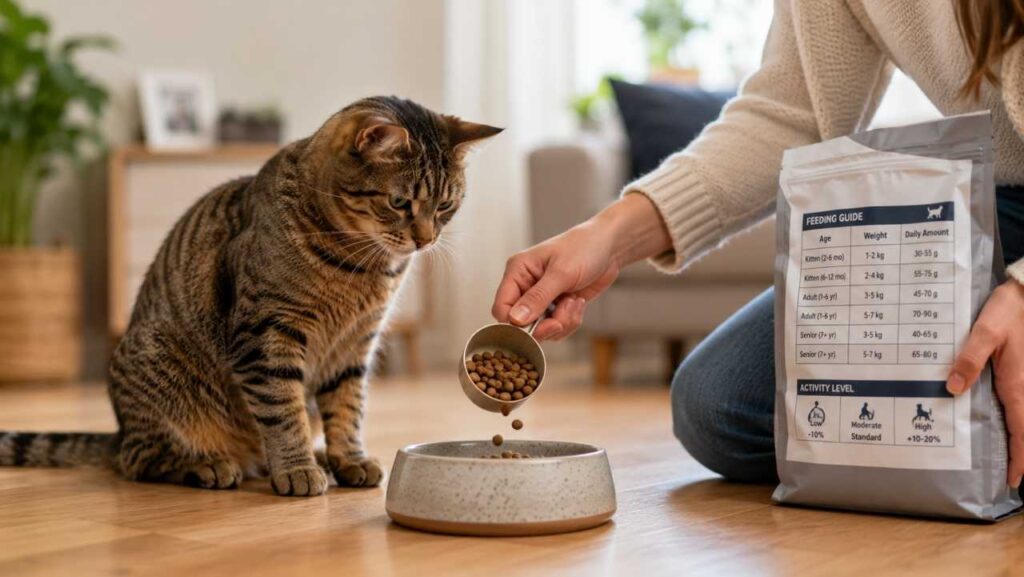
Why the Bag Isn’t Always Right
Feeding guidelines printed on cat food packaging are useful, but they’re often calculated for an “average” cat that may not actually resemble yours. They also tend to be on the generous side, since a company generally wants you to use more of their product, not less. Treat the bag as a rough starting point, then adjust based on your specific cat’s body condition over the following weeks.


Feeding Kittens
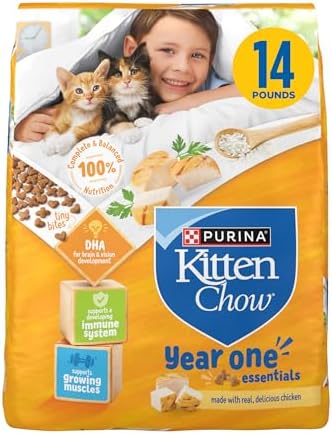
Kittens are basically tiny, extremely committed growth machines, and their calorie needs reflect that. A growing kitten needs roughly two to three times the calories per pound compared to an adult cat, since so much of what they eat goes toward building bone, muscle, and organs rather than just maintaining a body that’s already finished growing.
Practical guidelines for kittens:
- Feed kitten-specific formula food, which is calorie-dense and nutritionally balanced for growth.
- Offer food more frequently — three to four small meals a day is typical for kittens under six months, tapering down as they approach adulthood.
- Free-feeding is often fine for kittens, since they’re unlikely to overeat during this high-growth stage the way an adult cat might.


Feeding Adult Cats
Once a cat reaches full adult size (usually around one year old), calorie needs level off considerably. As a rough baseline, indoor adult cats generally need about 200–300 calories a day, though this varies a lot depending on size and activity.
A few adjustments worth making:
- Smaller, less active cats (especially indoor-only cats without much daily exercise) sit toward the lower end of the range.
- Larger or more active cats — ones who patrol the house at 2 AM like they’re on official duty — may need more.
- Two smaller meals a day tend to work better than one large meal, both for digestion and for preventing the “I am starving” performance that happens around hour six after a single big meal.
Feeding Senior Cats
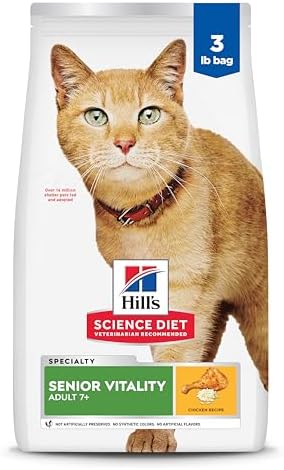
Senior cats (generally 10+ years) often need fewer calories overall due to reduced activity, but this isn’t universal — some older cats actually need more calories if they’re losing weight due to conditions like hyperthyroidism or reduced ability to absorb nutrients.
This is exactly why senior cats benefit from more frequent vet visits (ideally every six months): calorie needs at this life stage aren’t a simple math formula, they’re something to track and adjust based on actual weight trends, not assumptions.


Adjusting for Activity Level
Activity level changes the equation more than most people expect. A highly active, younger cat who spends hours chasing toys, climbing cat trees, and generally treating your living room like a parkour course burns noticeably more calories than a cat whose idea of cardio is walking to the food bowl and back.
Rough activity adjustments:
- Low activity (mostly sedentary indoor cats): stick toward the lower end of calorie ranges
- Moderate activity (regular play sessions, some climbing/exploring): middle of the range
- High activity (very playful, multi-cat households with lots of chasing, or outdoor access): higher end of the range



How to Tell If You’re Feeding the Right Amount
Numbers only get you so far — the real test is your cat’s actual body condition. A few practical checks:
- Rib check: You should be able to feel your cat’s ribs with gentle pressure, without them being visibly prominent.
- Waist check: Looking down at your cat from above, there should be a slight waist visible behind the ribs, not a straight line or a noticeable bulge.
- Energy and coat condition: A well-fed cat at an appropriate weight typically has good energy levels and a healthy, glossy coat.
If your cat is consistently on the heavier or leaner side of these checks, it’s worth adjusting portions gradually and tracking their weight over several weeks, rather than making a drastic change overnight.
Wet Food vs. Dry Food Math
Calorie density varies a lot between wet and dry food, which is part of why “cups” or “cans” alone aren’t a reliable measurement without checking the calorie content on the label. As a general pattern, wet food tends to be less calorie-dense per volume than dry food, partly because of its higher water content, so portion sizes can look deceptively different between the two even when the actual calorie count is similar.
If you’re feeding a mix of wet and dry, it’s worth calculating combined daily calories rather than treating each as a separate, unrelated meal.
When to Loop In Your Vet
General guidelines are a great starting point, but they’re not a substitute for professional advice, especially if your cat has a health condition, is significantly over or underweight, or has had a sudden appetite change. Vets can calculate a more precise target based on your cat’s actual body condition, medical history, and the specific food you’re using, which is a lot more accurate than any generalized chart (including this one).
The Bottom Line
There’s no single magic number that works for every cat, but understanding the basic factors — age, weight, activity level, and food type — gets you most of the way to a sensible feeding routine. Start with a reasonable baseline, track your cat’s body condition over time, and adjust as needed. Your cat, for the record, will still insist they’re starving no matter what number you land on. Some things about cats are simply beyond nutritional science.