Thanksgiving is the one day of the year when your kitchen smells like a five-star restaurant and your cat suddenly remembers you exist. Somewhere between the turkey coming out of the oven and the first slice of pie, a small furry food inspector will appear at your ankles, looking deeply underfed.
The short answer: a little plain, cooked, boneless turkey is fine for most cats, but most of the Thanksgiving table is not. Onions, garlic, rich gravy, cooked bones, chocolate, and anything heavily seasoned can cause anything from an upset stomach to a trip to the emergency vet. Here’s what’s safe, what’s risky, and how to treat your cat without regretting it on Friday.
Why Holiday Food Hits Cats Differently
Cats are obligate carnivores. Their bodies are built to run on meat, and they don’t need the carbs, butter, and spices that make our holiday food taste so good. They’re also small. A spoonful of buttery stuffing is a snack for you, but for a 10-pound cat it’s the equivalent of a whole extra dinner.
Some ingredients are more than just “too rich.” A few common Thanksgiving staples are genuinely toxic to cats, even in small amounts, and the effects don’t always show up right away.
The Safe(ish) List: Small Bites Only
These are generally okay in small amounts for a healthy adult cat. Think “a taste,” not “a portion.”
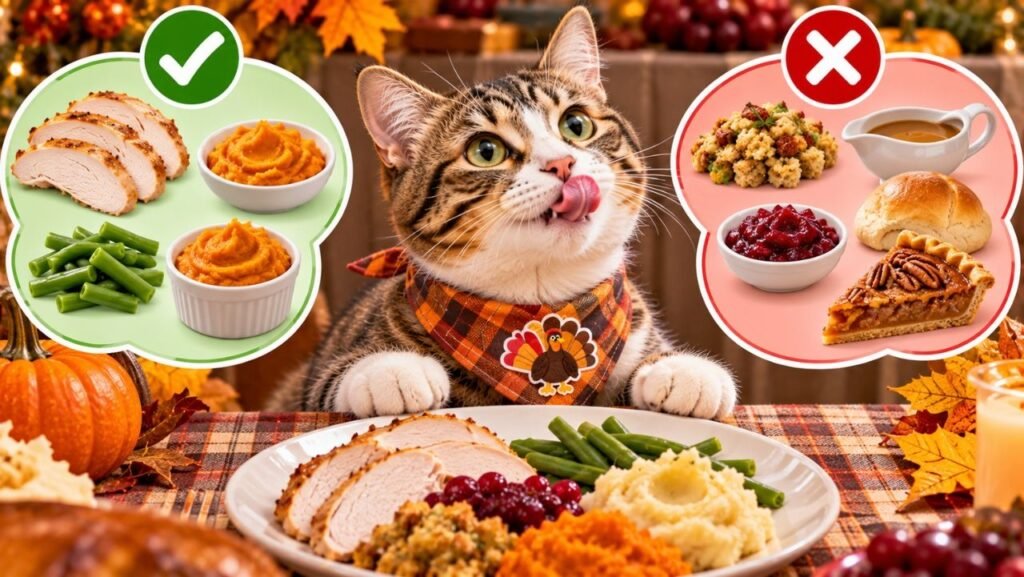
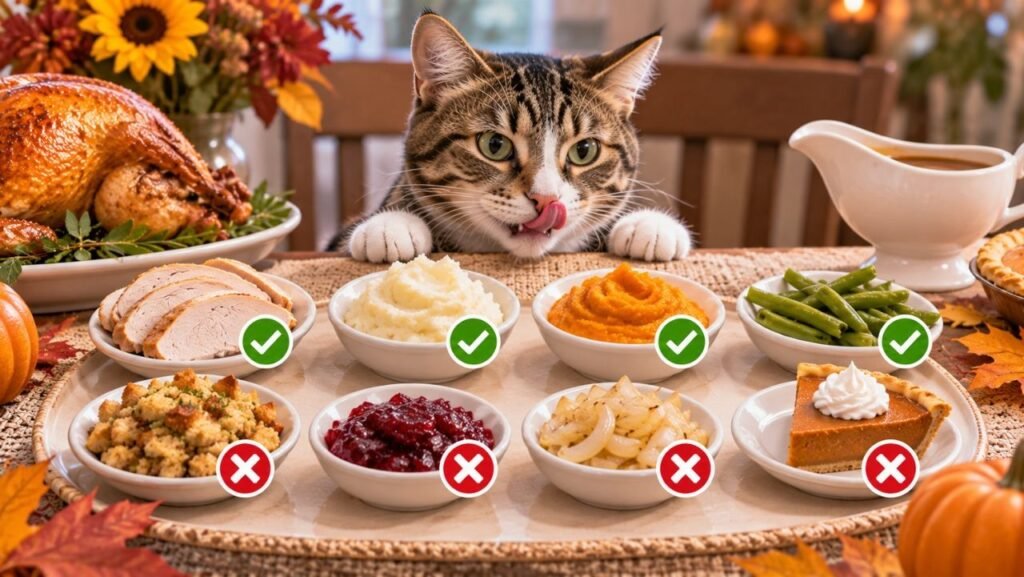
- Plain cooked turkey breast. White meat, no skin, no seasoning, no bones. A few small pieces is plenty.
- Plain cooked pumpkin. A teaspoon of plain canned pumpkin (not pumpkin pie filling) is fine. Some cats even like it.
- Plain cooked green beans. Unseasoned and without the casserole topping.
- A little plain cooked carrot. Soft, unseasoned, and cut small.
If your cat has kidney disease, diabetes, food allergies, or a sensitive stomach, skip the extras and check with your vet first. And remember that treats, including holiday treats, should stay under about 10% of your cat’s daily calories.
The Danger List: Keep These Off the Floor
Onions, Garlic, Leeks, and Chives
These are the big ones. Plants in the allium family can damage a cat’s red blood cells and lead to anemia. Cooking doesn’t make them safe, and powdered versions are often more concentrated. That means stuffing, gravy, many casseroles, and lots of seasoning blends are off-limits.
Cooked Bones
Cooked turkey bones become brittle and can splinter. Sharp fragments can injure the mouth, throat, or intestines, and larger pieces can cause blockages. Keep the carcass sealed and away from curious noses.
Turkey Skin, Fat, and Gravy
The tastiest parts for us are the riskiest for cats. Fatty, salty, buttery foods can cause vomiting and diarrhea, and gravy usually contains onion or garlic too.
Raw Dough and Batter
Raw yeast dough can expand in the stomach and produce alcohol as it ferments. Raw eggs and raw batter also carry a risk of bacteria like salmonella.
Chocolate and Desserts
Chocolate contains theobromine and caffeine, which are toxic to cats. Darker chocolate is more dangerous. Pies and cakes are also full of sugar and fat, and some sugar-free desserts contain sweeteners that aren’t safe for pets.
Nutmeg and Strong Spices
Nutmeg, found in pumpkin pie and eggnog, can cause problems in larger amounts. It’s easier to skip spiced foods entirely.
Alcohol
Even a small amount of wine, beer, or a boozy dessert can be dangerous for a cat. Keep drinks off low tables.
Grapes and Raisins
These are best known for causing kidney problems in dogs. The evidence in cats is less clear, but it’s not worth the risk. Keep them out of reach.
Milk and Cream
Despite the cartoon image, many adult cats are lactose intolerant. A saucer of cream is more likely to cause an upset stomach than a happy cat.
A Better Way to Treat Your Cat
The easiest way to stop begging is to give your cat their own holiday “plate.” A small portion of plain turkey on a lick mat, or a cat-safe lickable treat, lets your cat join the celebration without raiding the table.
Heads up: this post contains affiliate links. As an Amazon Associate, I earn from qualifying purchases, at no extra cost to you. Learn more.
Inaba Churu Lickable Cat Treats


Lick mats are especially useful on busy days. Spread a little wet food or a lickable treat on the mat, and your cat gets a slow, calming activity while you carve the turkey in peace.
LickiMat Classic Lick Mat for Cats
If you want to know why cats go wild for squeeze-tube treats, we break it down in our guide to the lickable treat craze.
Kitchen Habits That Keep Cats Safe
A few simple routines make a big difference on a busy cooking day:
- Cover the trash. A lidded or locking bin keeps bones, foil, and strings out of reach.
- Clear the counters. Push food back from the edges and never leave the turkey resting unattended.
- Watch the strings. The string used to tie a turkey smells delicious and can be very dangerous if swallowed.
- Tell your guests. Ask everyone, especially kids, not to feed the cat. One bite from each guest adds up fast.
- Feed your cat first. A cat with a full belly is a little less likely to go hunting under the table.
Simplehuman Lidded Kitchen Trash Can

- NEAT AND SECURE – Stainless steel liner rim flips up for a quick and easy liner change, then closes over the liner to ho…
- LINER POCKET – Keep liners where you need them. Dispense them one by one — no perforations or unraveling — from inside t…
- CLEANER STAINLESS STEEL – simplehuman’s invisible silver-ion coating resists fingerprints and the spread of germs withou…
For more year-round dangers, our room-by-room guide to toxic plants and foods is worth a quick read before the holidays.
What to Do If Your Cat Eats Something Risky
First, don’t panic, and don’t try to make your cat vomit at home. Home remedies like salt or hydrogen peroxide can hurt cats.
Instead:
- Figure out what and how much. Check the packaging or recipe if you can.
- Call your vet or an emergency animal poison helpline for advice, even if your cat seems fine.
- Watch for warning signs. Vomiting, diarrhea, drooling, lethargy, pale gums, a swollen belly, trouble breathing, or hiding are all reasons to get help.
If your cat swallowed string, ribbon, or a piece of bone, call your vet right away. Never pull on a string you can see in your cat’s mouth or under the tail.
The Bottom Line
Thanksgiving can be a treat for your cat, too, as long as the treat is simple. Offer a few bites of plain turkey, keep onions, garlic, bones, gravy, and desserts out of reach, and give your cat a lick mat or a cat-safe treat while you eat. Your cat will still act like you’ve starved them for a week, but at least you’ll both make it to Friday without a vet bill.
This article is for general informational purposes only and is not a substitute for veterinary advice. If you think your cat has eaten something toxic, contact your veterinarian or an emergency animal poison helpline right away.