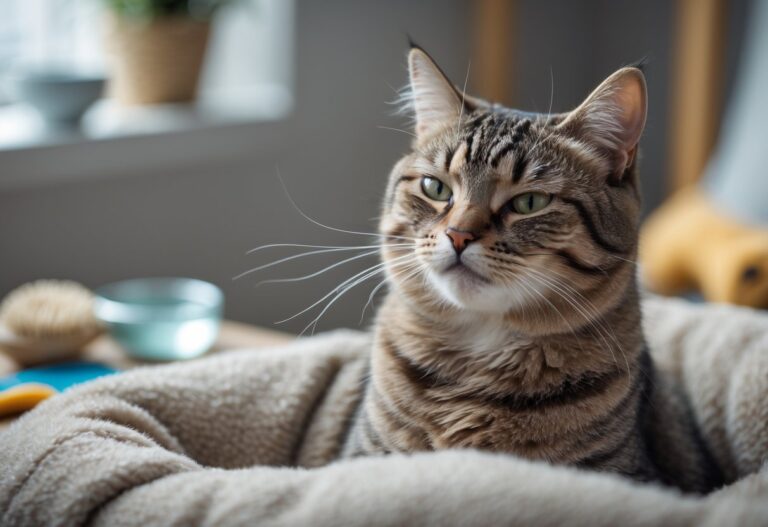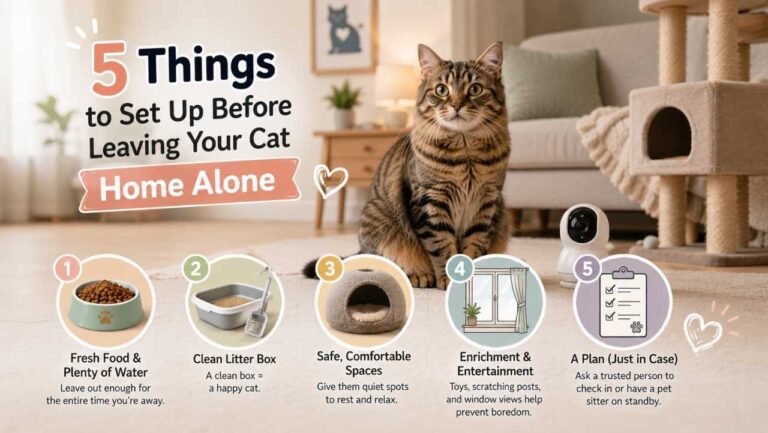
If you’ve ever watched your cat sleep through an entire afternoon, wake up just long enough to stretch dramatically and judge your life choices, and then immediately fall back asleep, you’ve witnessed a completely normal Tuesday in the life of a cat. Cats are professional-level nappers, and it’s not laziness, it’s biology doing exactly what it’s supposed to.
The average cat sleeps between 12 and 16 hours a day, and this is completely normal, rooted in their evolutionary history as efficient, energy-conserving hunters, not a sign of boredom or poor health. That said, there is such a thing as “too much” sleep, and knowing the difference matters. Let’s break down why cats sleep so much, and when a change in their sleep pattern is actually worth paying attention to.
Why Cats Are Built for This Much Sleep
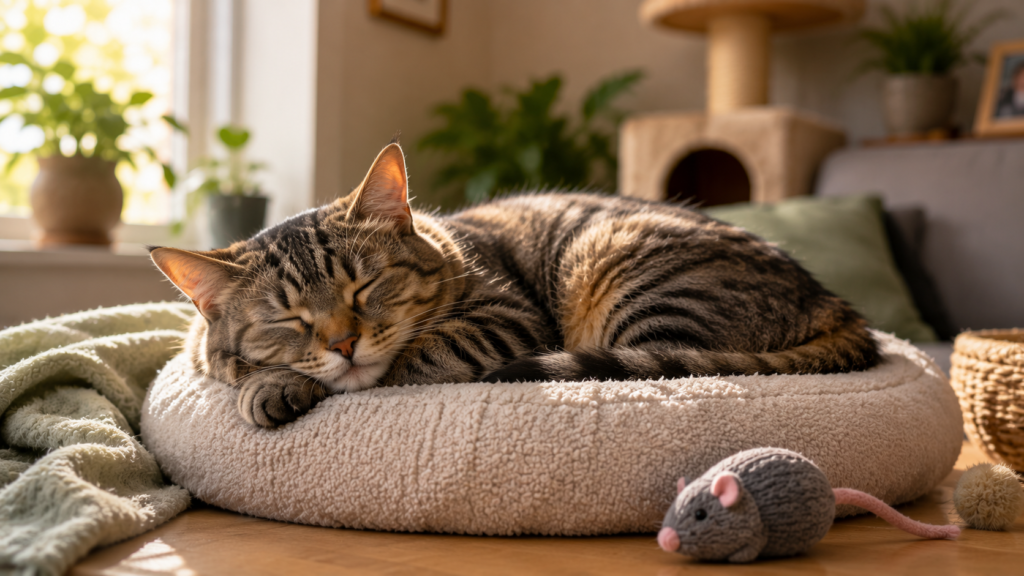
Cats are what’s known as crepuscular hunters, meaning they’re naturally most active at dawn and dusk, the times when their traditional prey (small rodents and birds) tend to be active too. Hunting, even in the wild, takes an enormous burst of energy for a relatively short window, and cats’ bodies evolved to conserve energy the rest of the time through extensive rest.
Even though your indoor cat’s “hunting” now mostly consists of stalking a laser pointer or ambushing your ankle from behind the couch, that same energy-conservation instinct is still fully intact. Sleeping most of the day isn’t a modern quirk, it’s leftover wiring from thousands of years of needing to be ready for short, intense bursts of activity.

Not All “Sleep” Is Actually Sleep
Interestingly, a lot of what looks like deep sleep is actually a lighter state of rest. Cats spend a significant portion of their resting hours in light dozing rather than deep sleep, staying alert enough to react instantly to sounds or movement. That’s why your seemingly unconscious cat can go from a dead sleep to full alert mode the second you open a snack bag three rooms away. They weren’t really “out,” they were just conserving energy while staying mission-ready.
True deep sleep, the kind with actual REM cycles (yes, cats dream too, complete with the occasional twitching paw or muffled meow mid-dream), makes up a smaller portion of their daily rest, often in shorter bursts throughout the day and night rather than one long stretch like human sleep.


Age Plays a Big Role
Sleep needs shift significantly across a cat’s life:
- Kittens sleep even more than adult cats, often 18-20 hours a day, since so much of their energy goes toward rapid growth and development.
- Adult cats generally settle into that 12-16 hour range, though individual variation is completely normal.
- Senior cats often sleep more again, partly due to naturally lower activity levels and partly because rest itself takes on a bigger role in supporting an aging body.
If you’ve noticed your cat’s sleep habits shifting significantly as they’ve aged, that’s usually a completely expected part of the process rather than something concerning on its own.
Activity Level and Environment Matter Too
Indoor cats, especially those without a ton of environmental stimulation, tend to sleep more than cats with regular play, exploration, or outdoor access. This isn’t necessarily a problem, but it is worth knowing that boredom and excess sleep can sometimes go hand in hand. A cat with more enrichment, wand toy sessions, climbing structures, window perches, may naturally show slightly more active, engaged waking hours, even if total sleep time doesn’t change dramatically.

When Sleep Might Actually Be a Concern
Here’s where it gets important: while extensive sleep is completely normal, a noticeable, sudden increase in sleep, especially paired with other changes, can be worth mentioning to your vet. A few patterns worth watching for:
- Sudden lethargy that feels different from your cat’s usual sleep pattern, not just resting more, but seeming unusually low-energy even when awake.
- Reduced interest in food, play, or affection alongside increased sleep.
- Sleeping in unusual locations they’ve never chosen before, especially if paired with hiding behavior.
- Noticeable weight loss or gain alongside a shift in activity levels.
- Difficulty getting comfortable, restlessness, or frequent waking, which can sometimes indicate discomfort rather than genuine rest.
None of these individually mean panic immediately, cats have off days just like anyone else, but a clear, sustained change from your cat’s normal baseline is worth a vet visit, particularly in senior cats where subtle shifts can be early signs of conditions like hyperthyroidism, kidney disease, or arthritis-related discomfort.
The Opposite Problem: Not Sleeping Enough
Less commonly discussed, but worth a mention: a cat who seems restless, unable to settle, or is unusually active at odd hours might also be signaling something worth paying attention to, whether that’s an environmental stressor, insufficient daytime stimulation, or in some cases, an underlying medical issue like hyperthyroidism, which can cause increased activity alongside weight loss. Sleep patterns running in either unusual direction, too much or not enough compared to your cat’s normal baseline, are the real signal to watch for.



How to Know Your Cat’s “Normal”
The most useful thing you can do isn’t memorizing a universal number, it’s knowing your own cat’s typical pattern. Some cats are naturally bigger sleepers than others, the same way some people need more sleep than their friends do. Paying attention to your specific cat’s baseline, and noticing genuine deviations from it, will always be more useful than comparing them to a generic average.
The Bottom Line
Your cat isn’t lazy, unmotivated, or secretly plotting a nap-based world takeover (probably), they’re just doing exactly what millions of years of evolution designed them to do: conserve energy for short, efficient bursts of activity. Extensive sleep is completely normal cat behavior, and honestly, kind of enviable. The real skill isn’t worrying about how much your cat sleeps, it’s noticing when that pattern shifts in a way that doesn’t match their usual rhythm. Everything else is just your cat living their best, extremely well-rested life.