
It’s 3:07 AM. You’re deeply, blissfully asleep. Then comes the sound of tiny paws hitting the hallway at approximately Mach 2, followed by a thunderous crash, a skid across the hardwood, and a launch off your head on the way to nowhere in particular. Your cat, who spent the entire day horizontal, has apparently been replaced by a small, furry rocket with no flight plan.
Nighttime zoomies are a completely normal burst of pent-up energy, rooted in your cat’s natural hunting rhythm. Cats are crepuscular, meaning they’re wired to be most active around dawn and dusk, and the pre-dawn hours sit right in the middle of their instinctive “go time.” The good news: it’s almost always harmless, and with a few changes, you can usually turn the midnight chaos down to a manageable hum.
What Are Zoomies, Exactly?
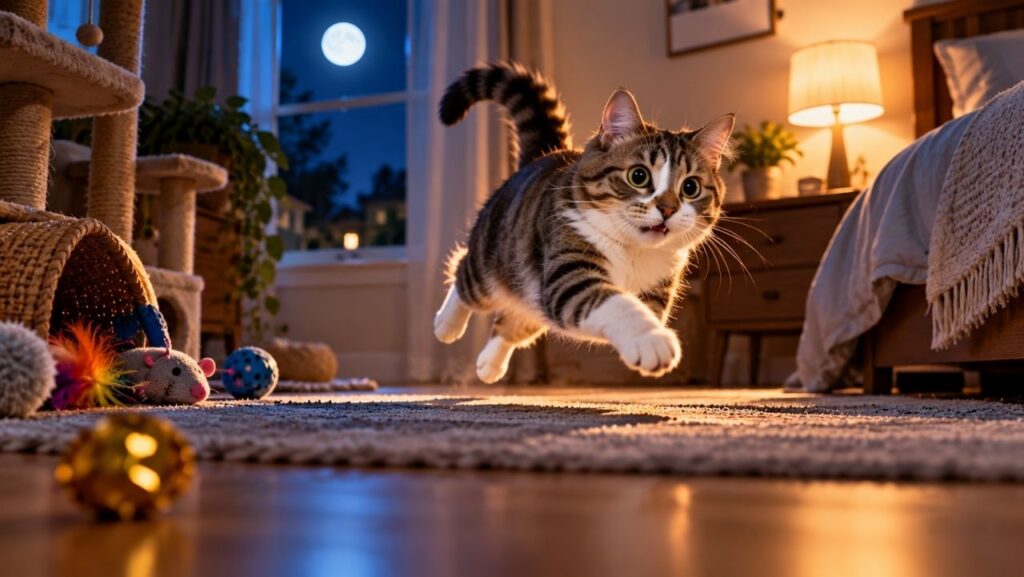
Vets and behaviorists call them FRAPs, short for “frenetic random activity periods,” which is a very professional name for “my cat just lost her mind for ninety seconds.” A zoomie session usually looks like some mix of sprinting, bouncing off furniture, wide eyes, puffed-up tail, and sideways hopping. It tends to come in short bursts, often under a few minutes, and then your cat acts like absolutely nothing happened and starts grooming with great dignity.
Why It Happens at 3 AM Specifically
They’re Built for Dawn and Dusk
In the wild, a cat’s prey (small rodents and birds) is most active around twilight, so cats evolved to be on high alert at the edges of the day. Your house cat may have never hunted anything scarier than a stuffed mouse, but the internal clock didn’t get the memo. Those early-morning hours are prime time on a cat’s biological schedule, which doesn’t care that you have work in five hours.



They Slept All Day, So the Battery Is Full
Cats sleep somewhere between twelve and sixteen hours a day, much of it in long naps while you’re out or busy. By the time the house goes quiet at night, your cat may have a full tank of unspent energy and nowhere to put it. You’re asleep, the lights are off, nothing’s happening, and your cat decides this is the perfect moment to go on a hunt.
Indoor Life Leaves Energy Unspent
An outdoor cat burns off energy stalking, climbing, and patrolling. An indoor cat often has none of those natural outlets, so the energy builds until it explodes, and the quiet of nighttime is the moment it tends to burst out. This is especially common in younger cats, kittens, and high-energy breeds.
Boredom and Under-Stimulation
A cat with an unstimulating day often finds their own entertainment after dark. If the only exciting event is you arriving home, don’t be surprised when they invent a game of “attack the human’s ankles” at 3 AM.
Hunger Might Be Part of It
Some cats get zoomies (or a related burst of vocal, pouncy energy) because their internal clock says breakfast is due. If your cat’s frantic activity comes with loud meowing and a beeline to the food bowl, hunger and anticipation may be driving the show.
How to Calm the 3 AM Chaos
You’re not going to eliminate zoomies entirely (and honestly, they’re a sign of a happy, healthy cat), but you can shift the timing and tone.



1. Play Hard Before Bed
This is the single most effective trick. A vigorous play session of ten to fifteen minutes right before you go to sleep, using a wand toy to mimic a real hunt, burns off the energy that would otherwise surface at 3 AM. Aim for a full “hunting sequence”: stalk, chase, pounce, catch.

- 1. KEEP CATS VERY ENTERTAINED : Cats are crazy about chaser games! Combine string and feather into a great cat toys for …
- 2. CLASSIC PRACTICAL INTERACTIVE CAT TOY : This cat wand toy can really get your cats to do a lot exercise while enterta…
- 3. CAT TOYS INTERACTIVE FOR INDOOR CATS : Pack includes: 2PCS Cat Wand + 9PCS Feather Worms Replacements + 2PCS Extra St…
2. Feed a Meal After Play
In the wild, the natural order is hunt, then eat, then groom, then sleep. Mimicking that order with a small meal after your evening play session can help your cat settle into a long, satisfied sleep afterward.
3. Use a Timed Feeder for the Early Breakfast Crowd
If your cat is waking you up demanding food, an automatic feeder set for the early morning means the food shows up without you being involved, which breaks the “wake the human, get breakfast” habit over time.



4. Add Daytime Stimulation
Window perches, puzzle feeders, rotating toys, and a cat tree give your cat more to do while you’re away, so they’re not arriving at bedtime with a full battery and nothing to spend it on.



5. Don’t Reward the Midnight Chaos
If your cat learns that 3 AM antics get you out of bed, giving attention, food, or even a startled yell, they’ll try it again. As hard as it is, staying quiet and still (or simply ignoring it) teaches them it’s not an effective strategy.
6. Consider Closing the Bedroom Door
If your cat’s zoomies are mostly harmless but disruptive, a closed bedroom door can protect your sleep while they burn it off elsewhere. Make sure they have toys, water, and a litter box accessible so it’s a comfortable setup rather than an exile.
When Zoomies Might Be Something Else
Occasional zoomies are normal. But if the behavior changes noticeably, it’s worth paying attention:
- A sudden increase in nighttime activity or restlessness, especially in an older cat, can sometimes be linked to hyperthyroidism or cognitive changes.
- Excessive vocalization alongside the sprinting, particularly at night, may signal discomfort or anxiety.
- Zoomies paired with weight loss, increased appetite, or increased thirst are worth a vet visit.
- Zoomies right after using the litter box, occasionally, can be a response to discomfort worth mentioning to your vet if it happens consistently.
A single burst here and there isn’t cause for concern, but a clear shift from your cat’s normal baseline deserves a check-in with your vet.
Do Cats Outgrow the Zoomies?
Often, yes, at least partly. Kittens and young adult cats tend to have the most frequent and intense zoomies, and many cats mellow with age. That said, plenty of cats keep a sprinkle of random sprinting into their senior years, because some things simply never stop being fun.



The Bottom Line
Your cat at 3 AM isn’t plotting against you (probably), they’re running an ancient hunting program on a modern schedule. A solid play session before bed, a small meal afterward, and plenty of daytime stimulation usually take the edge off, and the rest is just part of living with a small, fluffy predator. And if all else fails, take comfort in knowing that for a creature who sleeps sixteen hours a day, a ninety-second burst of absolute chaos is a pretty reasonable way to unwind.
Disclaimer: This article is for general informational purposes only and is not a substitute for professional veterinary advice. If you notice a sudden or concerning change in your cat’s behavior, please consult your veterinarian.