Holiday plants make a home feel festive. A red poinsettia on the table, a sprig of mistletoe in the doorway, a bouquet of lilies from a thoughtful guest. Unfortunately, cats don’t care how pretty something is. If it’s green, leafy, and new, it’s probably getting a taste test.
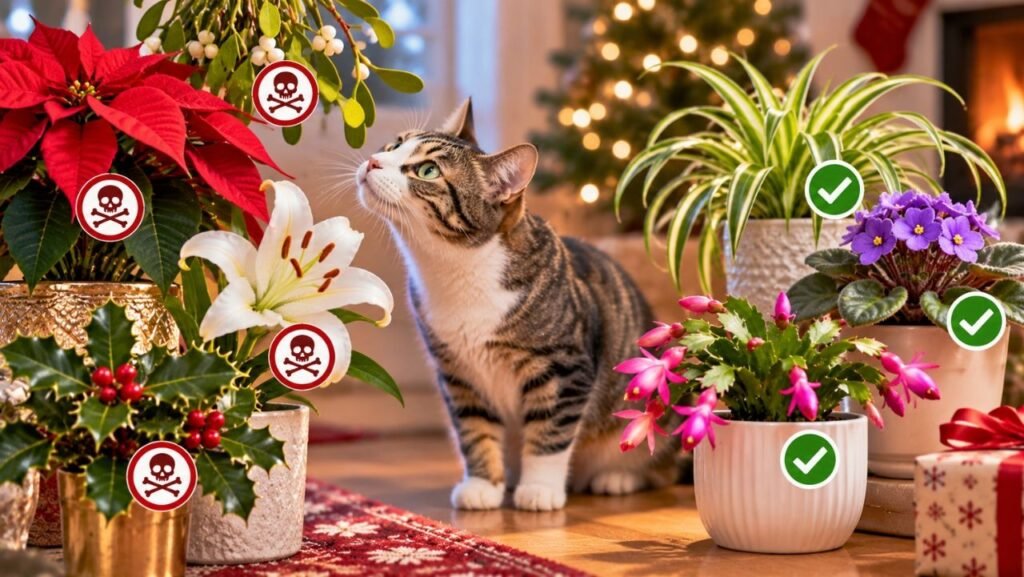
Some Christmas plants are mildly irritating to cats, and a few are seriously dangerous. Lilies are the biggest concern: even a small exposure can cause kidney failure. Here’s a plant-by-plant guide, plus festive alternatives that won’t put your cat at risk.
The Most Dangerous: Lilies
If you remember only one thing from this article, make it this: keep true lilies and daylilies completely out of a home with cats.
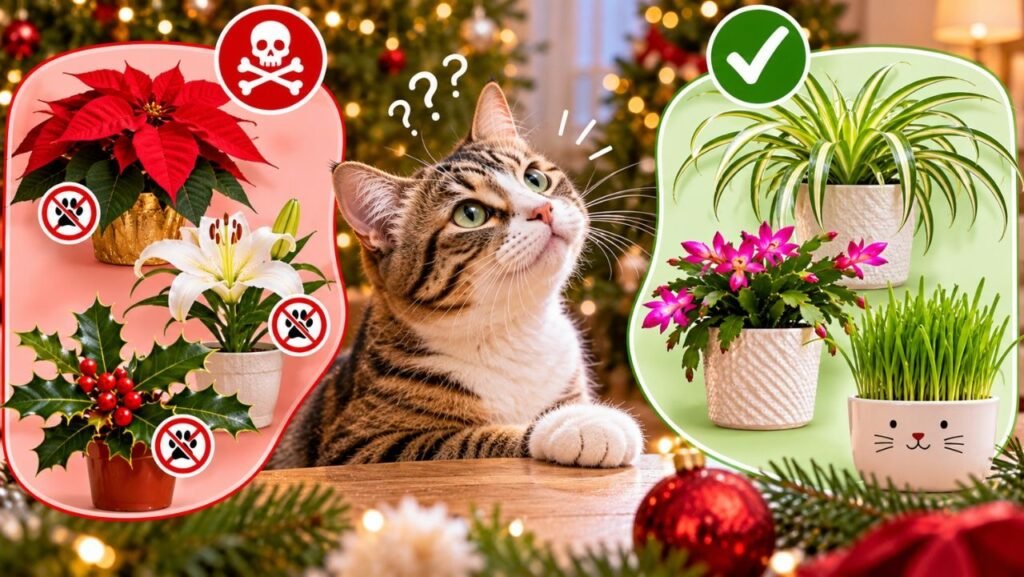
Lilies from the Lilium and Hemerocallis families, including Easter lilies, tiger lilies, Asiatic lilies, stargazer lilies, and daylilies, are extremely toxic to cats. Every part of the plant is dangerous: the petals, leaves, stems, pollen, and even the water in the vase. A cat can be poisoned just by grooming pollen off its fur.
Lilies are popular in holiday bouquets and Christmas arrangements, so check any flowers you receive. If you’re not sure what’s in a bouquet, keep it out of the house or in a room your cat can’t enter.
Signs of lily poisoning can include vomiting, drooling, loss of appetite, lethargy, and changes in urination. Early treatment is critical. If you think your cat has touched or chewed a lily, call your vet or an emergency animal poison helpline immediately, even if your cat seems fine.
Toxic Holiday Plants to Avoid
Mistletoe
Mistletoe can cause vomiting, diarrhea, and drooling. Eating larger amounts may lead to more serious problems, including effects on the heart. Many holiday decorations use artificial mistletoe, which is a much safer choice.
Holly
Holly leaves and berries can cause vomiting, diarrhea, and drooling, and the spiky leaves can irritate the mouth. Keep real holly out of reach, including in wreaths and table arrangements.
Amaryllis
This popular holiday bulb plant can cause vomiting, drooling, low energy, and stomach pain. The bulb is the most toxic part, so be especially careful with potted amaryllis.
Poinsettias
Poinsettias have a scarier reputation than they deserve. Their milky sap can irritate a cat’s mouth and stomach, causing drooling or vomiting, but serious poisoning is rare. They’re still best kept out of reach.
Christmas Trees
Pine and fir trees are only mildly toxic, but their oils can irritate the mouth and stomach, and the needles can cause injury if swallowed. The bigger concerns are tree water and decorations. See our guide on how to cat-proof your Christmas tree for tips.
Cat-Safe Holiday Plant Alternatives
You don’t have to give up on greenery. A few holiday-friendly plants are considered non-toxic to cats:
- Christmas cactus. A festive, flowering plant that’s considered non-toxic to cats. Large amounts may still cause a mild upset stomach, so it’s still best kept out of reach.
- Orchids. The common moth orchid is considered non-toxic and makes an elegant centerpiece.
- Spider plant. Safe, easy to grow, and very popular with cats who like to nibble.
- Cat grass. The best option of all. It gives your cat something green and safe to chew, which may make your other plants less tempting.
Heads up: this post contains affiliate links. As an Amazon Associate, I earn from qualifying purchases, at no extra cost to you. Learn more.
Organic Cat Grass Growing Kit

- Your Cat Deserves the Best: Our cat grass blend adds important nutrients to your cat’s diet, including wheat grass, oat,…
- Cat Plant Magic: Add a soil disk, a splash of water, and a sprinkling of seeds, and watch your cat grass planter kit spr…
- Good for Cats, Good for All: Not only are our grow kits organic and GMO-free, but our cat grass for indoor cats deters t…
Still, “non-toxic” doesn’t mean “edible in unlimited amounts.” Any plant can cause a little stomach upset if a cat eats enough of it.
Artificial Plants: The Easiest Fix
If you love the look of poinsettias, holly, and mistletoe, artificial versions give you all the color without the risk. Choose sturdy, good-quality artificial plants with no small loose berries or glitter that could be chewed off and swallowed.
Artificial Poinsettia Flowers

- [REALISTIC PE GREENERY] Crafted with textured PE evergreen foliage and layered poinsettia blooms, these artificial flowe…
- [FULL 2-PACK CHRISTMAS ARRANGEMENT] Each 23.6-inch poinsettia stake combines 5 vibrant red poinsettias, 4 pine branches,…
- [MADE FOR OUTDOOR WINTER DECOR] UV-protected, fade-resistant foliage helps maintain its festive red and green appearance…
Artificial Christmas Garland

- Lifelike Norfolk Pine Garland: Made from high-quality materials, each branch feels soft to the touch and features natura…
- Size and Quantity: Each set includes 2 garlands, each 6 feet long, with lush, full foliage. The artificial norfolk pine …
- Adjustable and Flexible: Our artificial norfolk pine garlands features dense, lush foliage with vibrant, long lasting co…
A realistic garland or wreath can give your home that full holiday look, while keeping it cat-safe.
How to Keep Plants Away From Curious Cats
If you do keep real plants in the house, a few habits help:
- Place plants up high in rooms your cat doesn’t use, or in a closed room.
- Hang wreaths on doors and walls instead of laying them on tables.
- Clean up fallen leaves, petals, and berries right away.
- Offer cat grass so your cat has a safe plant to chew.
- Ask guests not to bring lilies as gifts. A quick text before the holidays saves a lot of worry.
Holiday bouquets deserve a closer look. Florists often mix lilies, alstroemeria, roses, and greenery in the same arrangement, and many bouquets come with pine, holly, or berries tucked in. If you receive flowers and can’t identify everything in them, enjoy them in a room your cat can’t reach, or take a photo and ask your florist what’s inside.
For a complete list of everyday plants and foods to watch out for, check our room-by-room guide to toxic plants and foods.
What to Do If Your Cat Eats a Holiday Plant
- Remove any plant material from your cat’s mouth and the area, if it’s safe to do so.
- Identify the plant. Take a photo or bring a piece with you. The name of the plant helps your vet decide on treatment.
- Call your vet or an emergency animal poison helpline right away, especially for lilies.
- Don’t try to make your cat vomit unless a veterinarian tells you to.
Watch for vomiting, drooling, diarrhea, loss of appetite, lethargy, pawing at the mouth, or changes in drinking and urination. With lilies, symptoms can be delayed, so don’t wait for them to appear.
The Bottom Line
The holidays can still be green and festive in a home with cats. Skip lilies completely, keep mistletoe, holly, and amaryllis out of reach, and treat poinsettias as a “look, don’t chew” plant. For the safest holiday décor, choose artificial greenery, a Christmas cactus or orchid, and a pot of cat grass for your resident plant critic. Your cat gets something to nibble, and you get a home that looks merry without the worry.
This article is for general informational purposes only and is not a substitute for veterinary advice. If you think your cat has eaten or touched a toxic plant, contact your veterinarian or an emergency animal poison helpline immediately.