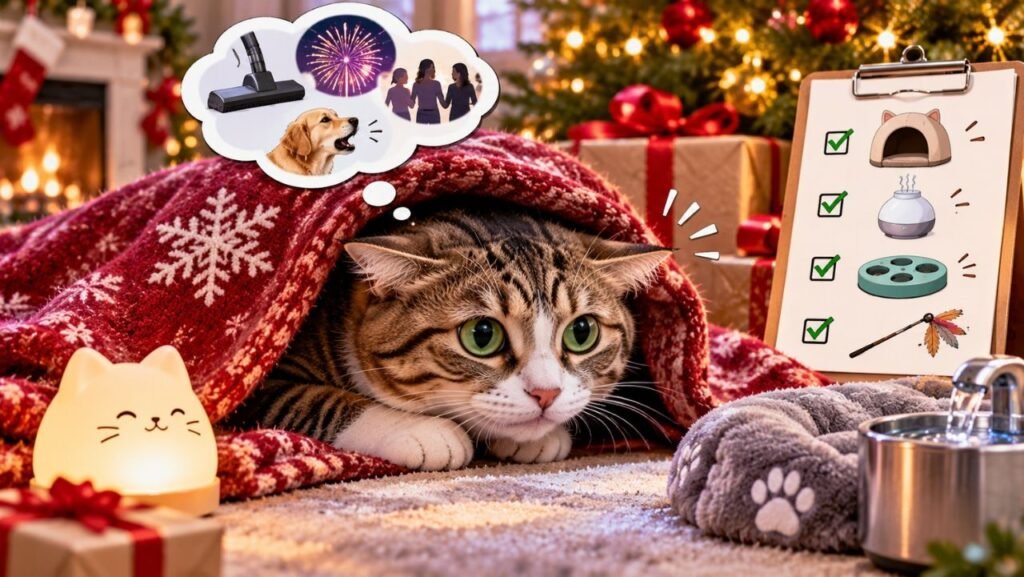
For most people, the holidays are a mix of joy and chaos. For cats, it’s mostly chaos. Their living room grows a tree. Strangers arrive with suitcases. The vacuum runs every day. Dinner is late, the music is loud, and someone keeps trying to put a tiny Santa hat on them.
Holiday stress in cats is common, and it can show up in ways that are easy to miss. Some cats hide, some overgroom, and some stop using the litter box. The good news is that a few simple changes can help your cat feel safe again. Here’s what to watch for and how to help.
Why the Holidays Are Stressful for Cats
Cats rely on routine, familiar smells, and control over their territory. The holidays disrupt all three:
- New people in the house, sometimes staying overnight
- Loud noise from parties, cooking, and fireworks on New Year’s Eve
- Rearranged furniture and new decorations
- Changes to the schedule, including late meals and less playtime
- Travel, whether your cat goes with you or stays with a sitter
- New smells from food, candles, guests, and their pets
Even happy changes can be stressful. A cat doesn’t know that the visitors are family or that the tree is temporary. It just knows things are different.
Signs Your Cat Is Stressed
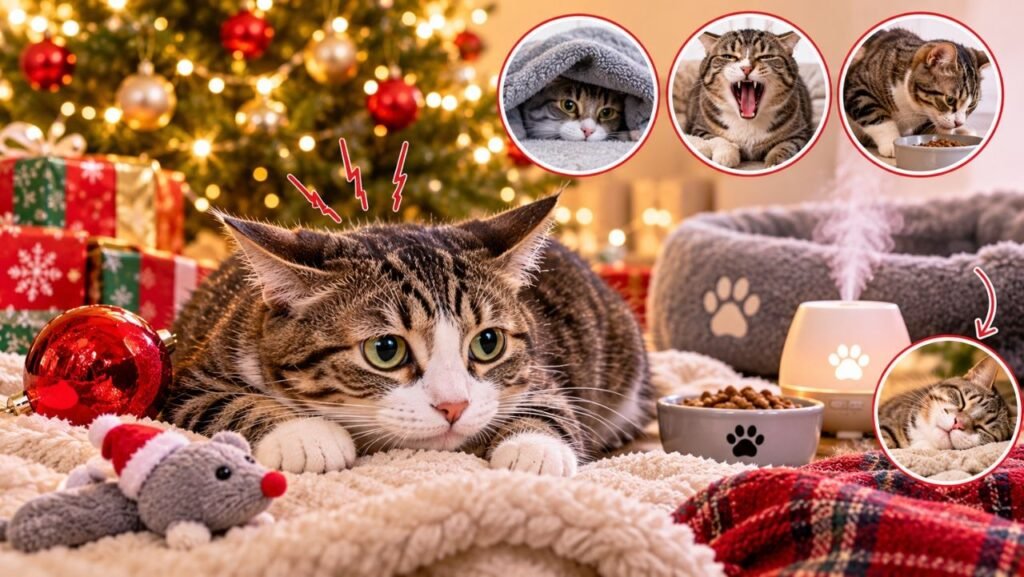
Stress in cats is often quiet. Watch for changes from your cat’s normal behavior, such as:
- Hiding more than usual, or refusing to come out
- Eating less, or skipping meals
- Peeing or pooping outside the litter box
- Overgrooming, which can lead to thin patches or bald spots
- Excess meowing, especially at night
- Hissing, swatting, or biting, even with people they know
- Restlessness or pacing
- Vomiting or diarrhea
- Flattened ears, a tucked tail, or dilated pupils
Some of these signs can also point to medical problems, like a urinary blockage or an illness. If your cat strains in the litter box, stops eating, or seems unwell, call your vet rather than assuming it’s stress.
How to Help a Stressed Cat
Create a Safe Space
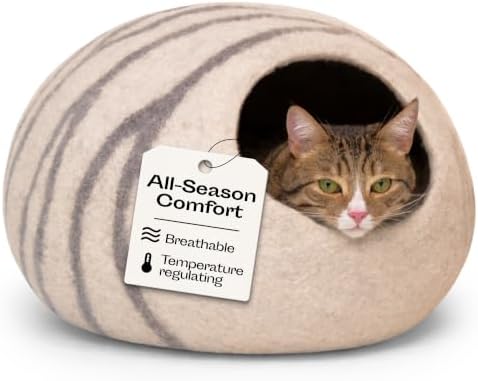
Every cat needs a quiet place to retreat. Choose a room away from the noise and set it up with food, water, a litter box, a cozy hiding spot, and something that smells familiar. Keep the door closed during busy times so guests can’t wander in.
Heads up: this post contains affiliate links. As an Amazon Associate, I earn from qualifying purchases, at no extra cost to you. Learn more.
Covered Cat Cave Bed

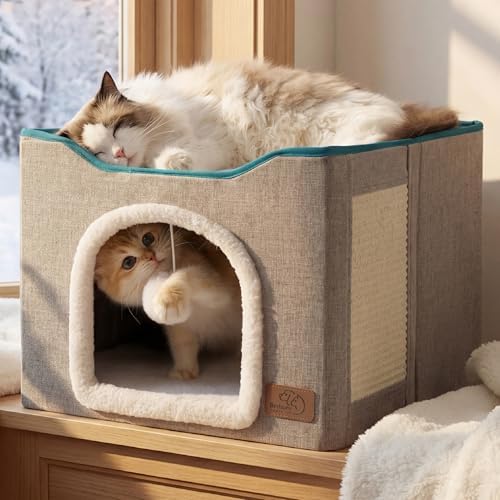
We share a full safe room setup in our guide on hosting Thanksgiving with a cat who hates guests, and the same plan works for Christmas and New Year’s.
Keep the Routine Steady
Feed meals at the usual times, scoop the litter box daily, and keep bedtime as normal as possible. A predictable routine tells your cat that, despite everything, the important things haven’t changed.
Make Time for Play
Play is one of the best stress relievers for cats. Two short sessions a day with a wand toy let your cat chase, pounce, and burn off nervous energy. End with a small meal or treat, which mimics the natural “hunt, catch, eat” rhythm.
Da Bird Feather Wand Cat Toy


Give Them Height
Cats often feel safer when they can watch from above. A cat tree, shelf, or window perch lets your cat observe the action without being in the middle of it.
Try Calming Aids
Some cats benefit from pheromone diffusers, which release a synthetic version of the comforting scent cats leave when they rub their cheeks on things. Results vary from cat to cat, but they’re easy to try and drug-free.
FELIWAY Classic Cat Calming Diffuser

- HELPS REDUCE CAT STRESS: FELIWAY Classic is a cat calming diffuser that helps individual cats feel calm and reduce stres…
- CREATES A CALMING HOME ENVIRONMENT: FELIWAY Classic uses calming pheromone messages that cats naturally understand to he…
- SAFE* AND NON-SEDATING: FELIWAY Classic is not a sedative. It’s safe for use around cats, kittens, people and other pets…
Calming chews and supplements are another option. Talk to your vet before starting any supplement, especially if your cat takes medication or has health issues.
VetriScience Composure Calming Chews for Cats
For more ideas, read our roundup of the best calming products for anxious cats.
Let Your Cat Set the Pace
Don’t force your cat to meet guests or wear a costume. Ask visitors to let the cat approach them, and never pull a cat out of a hiding spot. A cat that feels in control usually calms down faster.
Holiday Travel and Pet Sitters
If you’re traveling, most cats are happier staying at home with a trusted sitter than coming along. Leave clear notes about feeding, medications, and your vet’s number, and make sure the sitter knows where your cat likes to hide.
If you’ll be away for a day or two and want to check in, a pet camera can be reassuring. Our guide to pet cameras for cats covers what to look for, and our checklist of 5 things to set up before leaving your cat home alone helps you prepare.
New Year’s Eve Fireworks
Fireworks can frighten cats badly. On New Year’s Eve, keep your cat indoors, close windows and curtains, and play soft music or white noise to mask the bangs. Make sure their safe room is ready before the noise starts, and check that their microchip details are up to date in case they slip out.
When to Call the Vet
Contact your vet if your cat:
- Hasn’t eaten for more than a day. Cats that stop eating can develop serious liver problems.
- Strains to pee or produces little or no urine. This can be an emergency, especially in male cats.
- Vomits repeatedly or has ongoing diarrhea.
- Shows stress signs that last for more than a few days after the holidays end.
Your vet can rule out medical causes and, if needed, discuss options for anxious cats.
The Bottom Line
The holidays turn your cat’s world upside down, so a little extra care goes a long way. Give your cat a quiet safe room, keep meals and play on schedule, offer high places to watch from, and let them decide when to say hello. Watch for changes in eating, litter habits, and behavior, and call your vet if something seems off. By January, your cat will be back to normal, which probably means sleeping on the warmest spot in the house as if nothing ever happened.
This article is for general informational purposes only and is not a substitute for veterinary advice. If your cat shows signs of illness or ongoing stress, contact your veterinarian.