
Here’s the sneaky thing about diabetes in cats: it rarely announces itself. There’s no dramatic collapse on day one. Instead, your cat drinks a little more water than usual, the litter box gets a little heavier, and her appetite seems great, so everything looks fine. Meanwhile, behind the scenes, her body is struggling to use sugar for energy.
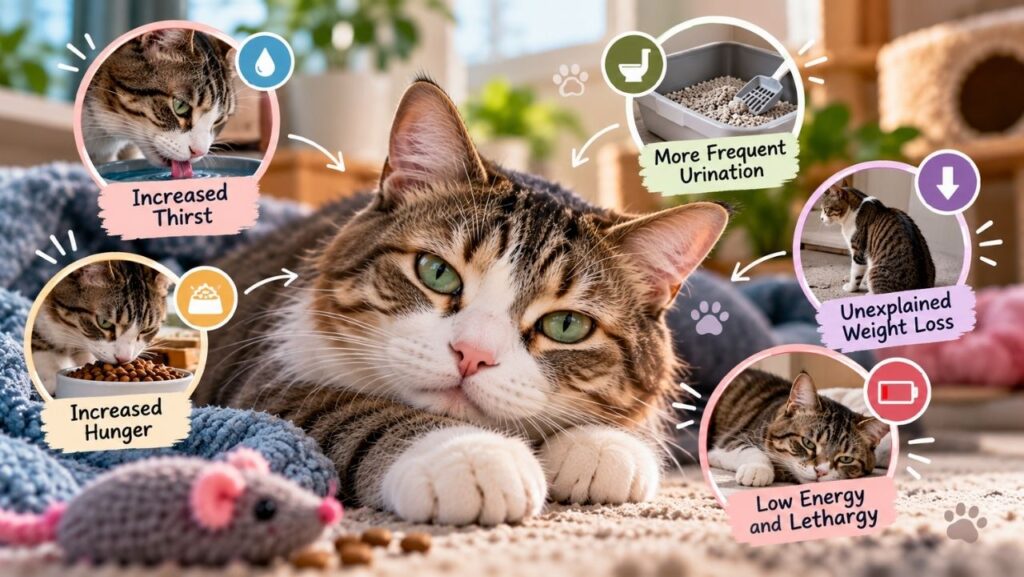
The most common early signs of diabetes in cats are drinking more, urinating more, eating more, and still losing weight. Because these changes creep in slowly, many owners miss them until their cat is quite sick. The good news is that feline diabetes is manageable, especially when it’s caught early, and some cats can even go into remission with the right care. Let’s look at what to watch for.
What Is Cat Diabetes, Exactly?
Diabetes mellitus happens when the body doesn’t make enough insulin, or can’t use it properly. Insulin is the hormone that moves sugar (glucose) from the blood into the cells, where it’s used for energy. Without enough working insulin, sugar builds up in the blood while the cells are starved, a bit like having a full fridge and no way to open the door.
Most diabetic cats have a condition similar to type 2 diabetes in humans, where the body becomes resistant to insulin over time. That’s one reason weight and lifestyle matter so much for cats.
The Silent Symptoms (Easy to Miss)
1. Drinking More Water
This is often the very first sign. Your cat might camp out at the water bowl, drink from the tap, or sip from places she never used to. It’s easy to put it down to hot weather or dry food.
A handy trick: If your cat seems unusually thirsty week after week, it’s worth mentioning to your vet, even if nothing else seems wrong.


2. Bigger or More Frequent Urination
More drinking means more peeing. You may notice large, heavy clumps in the litter box, needing to scoop or change litter more often, or accidents outside the box. Many owners think their cat is being naughty, when it’s actually a medical signal.
3. Weight Loss Despite a Big Appetite
If your cat is eating well (or even begging for more) but getting thinner, pay attention. Without usable sugar, the body starts breaking down fat and muscle for energy. You might notice a bony spine or hips under the fur before you notice it on the scale.
4. Ravenous Hunger
A cat who suddenly acts like she’s never been fed isn’t always just being dramatic. Constant hunger can be a symptom, because her cells aren’t getting the energy from her food.
5. Low Energy or Less Interest in Play
Diabetic cats may seem tired, sleep more, or lose interest in the things they love. It’s easy to blame age, but it’s worth asking.



6. A Dull, Greasy, or Unkempt Coat
Cats who feel unwell often stop grooming properly. A scruffy or dull coat can be a subtle sign that something’s off.
7. Weak Back Legs or Walking Flat on the Hocks
This is a classic diabetes sign in cats and one of the most distinctive. High blood sugar can damage nerves (diabetic neuropathy), and affected cats may walk “flat-footed,” with their heels touching the ground, and have trouble jumping. If you see this, call your vet.
8. Repeated Infections
High sugar levels can make urinary tract and skin infections more common. If your cat keeps getting them, ask your vet whether diabetes might be involved.
When It Becomes an Emergency
Untreated diabetes can lead to a serious condition called diabetic ketoacidosis (DKA). This is an emergency. Go to a vet right away if your cat shows:
- Vomiting or refusing food
- Extreme weakness or lethargy
- Rapid or labored breathing
- Collapse
- A sweet or “fruity” smell on the breath
Don’t wait to see if it improves.



Which Cats Are Most at Risk?
Some cats are more likely to develop diabetes. Common risk factors include:
- Obesity. This is the biggest preventable risk factor.
- Age. Middle-aged and older cats are more commonly affected.
- Being male and neutered.
- Inactivity and a high-calorie, free-feeding lifestyle.
- Certain medications, such as long-term steroids.
- Breed. Burmese cats, for example, are known to be at higher risk.
- Other conditions, such as pancreatitis.
Having a risk factor doesn’t mean your cat will get diabetes, but it’s a reason to be more vigilant.
How Is It Diagnosed?
Your vet will usually run blood and urine tests to check glucose levels and look for sugar in the urine. Because stress can temporarily raise a cat’s blood sugar (a trip to the vet is not exactly a spa day), vets often use additional tests, such as a fructosamine test, to see the longer-term picture.
Can It Be Treated?
Yes. Treatment usually involves a combination of:
- Insulin injections given at home, usually twice a day. It sounds daunting, but most owners get the hang of it quickly, and the needles are very small.
- Diet. Many diabetic cats do well on a high-protein, low-carbohydrate diet, but your vet should guide the choice.
- Weight management for overweight cats.
- Regular monitoring with checkups and glucose tests.
With early, consistent management, many diabetic cats live long, happy lives, and some go into remission, meaning they no longer need insulin for a time. Never change your cat’s insulin dose or diet on your own, since the wrong dose can be dangerous.



How to Lower the Risk
You can’t prevent every case, but you can stack the odds in your cat’s favor:
- Keep her at a healthy weight. Ask your vet what’s ideal for your cat.
- Measure meals rather than free-feeding, and limit high-calorie treats.
- Encourage play. Daily wand-toy sessions help keep weight and muscle in check.
- Schedule regular checkups, especially once she reaches middle age.
- Track changes. Keep an eye on water intake, litter box habits, and weight.
The Bottom Line
Cat diabetes is called “silent” because the early signs look like ordinary cat quirks: a thirsty cat, a heavier litter box, a good appetite. But if you notice more drinking, more peeing, and weight loss despite eating well, don’t wait it out. A simple vet visit can catch it early, when it’s most manageable. Pay attention to the small stuff, and you give your cat the best chance at a long, healthy, snack-loving life.
Disclaimer: This article is for general informational purposes only and is not a substitute for professional veterinary advice, diagnosis, or treatment. If you notice any of these signs in your cat, please contact your veterinarian promptly. If your cat is vomiting, collapsing, or having trouble breathing, seek emergency care immediately.